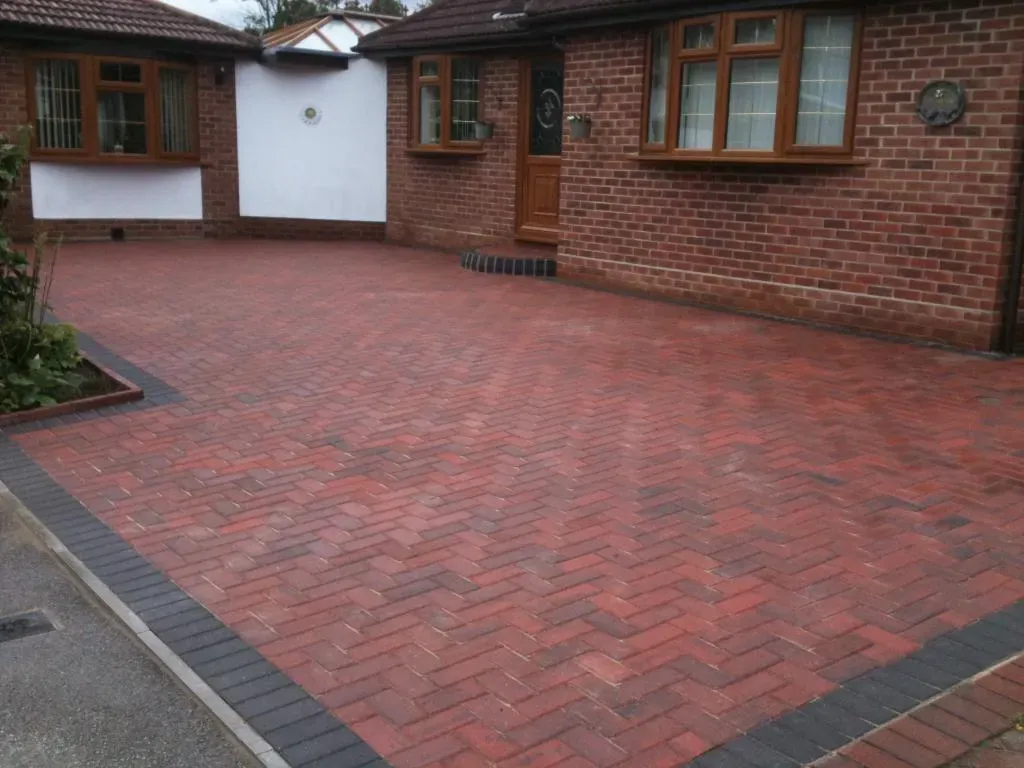
Block Paving Portsmouth
Block Paving in Portsmouth
Driveways, paths and patios in concrete and clay block paving — interlocking patterns, contrast borders and permeable build-ups, all laid over a properly compacted sub-base.
Why block paving still suits Portsmouth properties
Block paving is the most forgiving driveway surface in a city of narrow plots and awkward boundaries. Blocks can be cut to follow a bay window, a bin store or a garden wall that is not quite square. A soldier course tidies the edge against a pavement. And when Southern Water or a broadband contractor eventually opens a trench across your frontage, the blocks come up and go back down instead of leaving a tarmac patch.
It also copes with the way people actually use a driveway — turning wheels on a stationary car, a heavy vehicle reversing in, bins dragged across the same line every week — because the load spreads through the interlock rather than sitting on a rigid slab.
Blocks, colours and formats
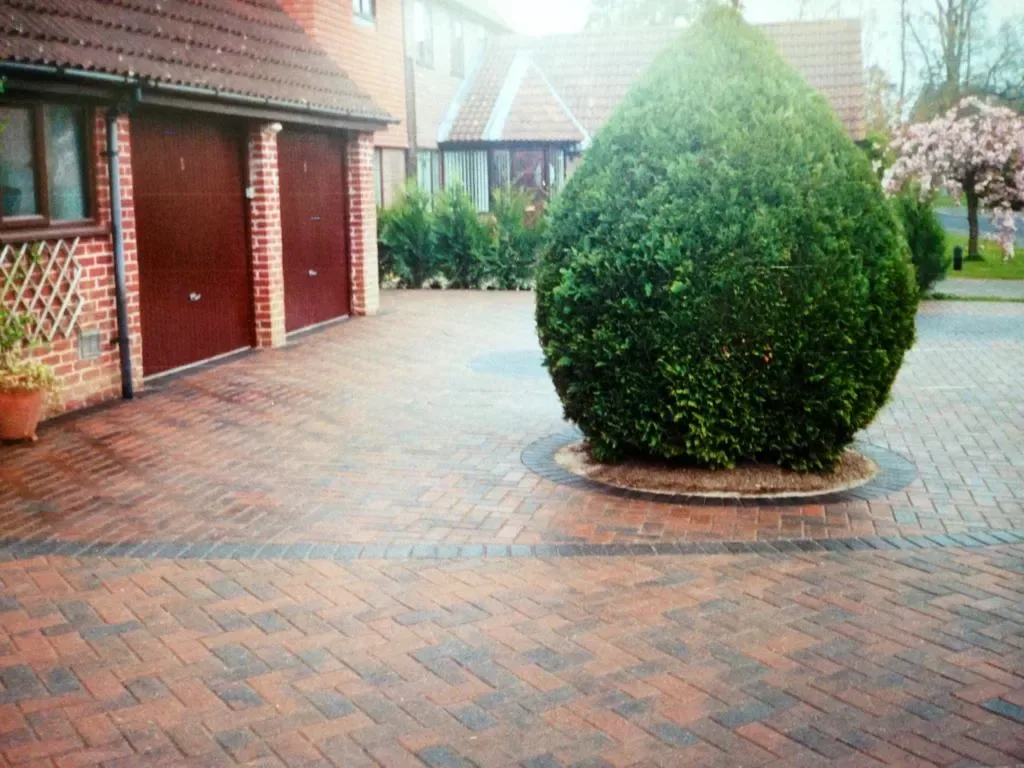
Standard concrete blocks (200 x 100 x 50mm) are the everyday choice: economical, widely available and produced in brindle, charcoal, buff and red. Fifty millimetre blocks are for driveways; 60mm units are used where heavier loading is expected.
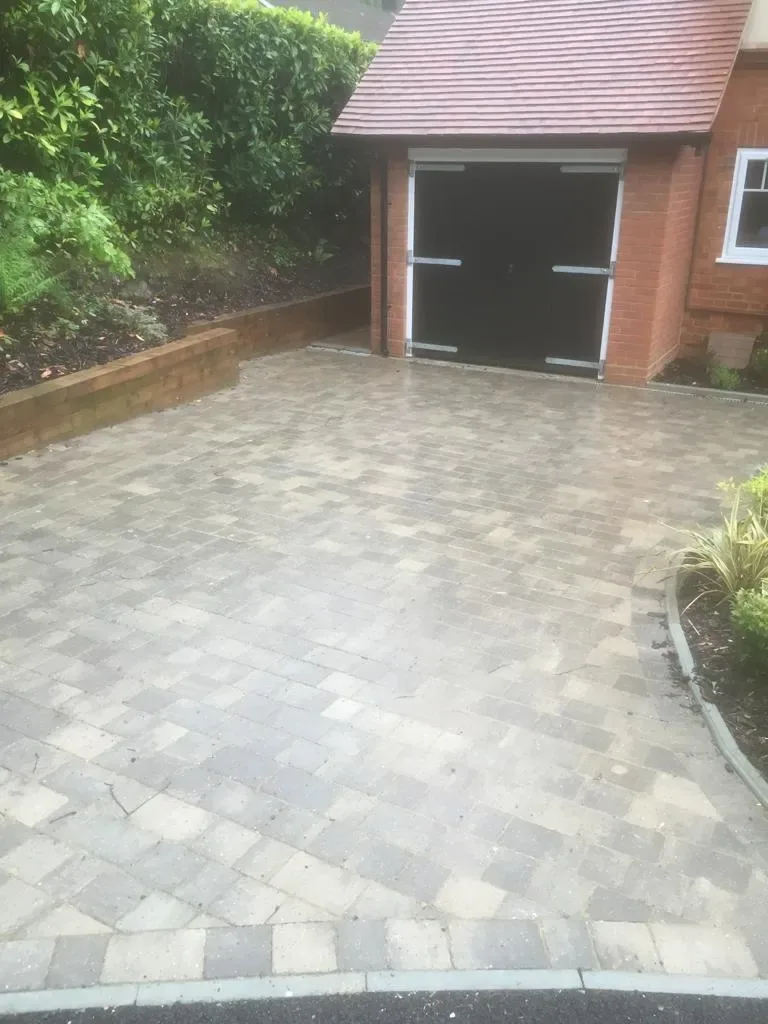
Tumbled and aged blocks have softened edges and a weathered look that sits better against older brickwork in Old Portsmouth and Southsea. Clay pavers keep their colour permanently because it is the fired clay itself rather than a pigment, and they age gracefully. Setts and cobbles in granite or concrete work well for borders, aprons and circular features.
Mixed-size “country cobble” formats give a less regimented finish, and large-format smooth blocks suit contemporary houses. We bring samples on the site visit so you can see them against your brickwork rather than choosing from a brochure photo.
Permeable block paving
A permeable system uses wider joints filled with a clean 2–6mm grit, sitting on an open-graded laying course and a sub-base of washed, single-sized stone. Water drops through the joints and is held in the voids in the stone before soaking away or discharging slowly. There are no gullies to block and no run-off across the footway, which usually keeps the job within permitted development.
It costs more than a standard build-up because the aggregate is more expensive and the excavation is deeper. Where the ground genuinely will not soak away — parts of Portsea Island included — we design it as an attenuation layer with a controlled outlet instead.
Installation and aftercare
Edge restraints are set first and left to gain strength. The screeded laying course is never walked on, blocks are laid face-up from the paving already down, and cuts are made with a disc rather than snapped. Once the full area is laid we joint with kiln-dried sand, vibrate the surface with a plate compactor on a rubber sole, then re-sand until every joint is proud and settled.
Aftercare is straightforward: sweep it, top up the joints occasionally, and treat any weed growth early. A white bloom of efflorescence in the first few months is normal on concrete blocks and washes out with time. See the surface in context on our projects page, or read about full driveway installation.
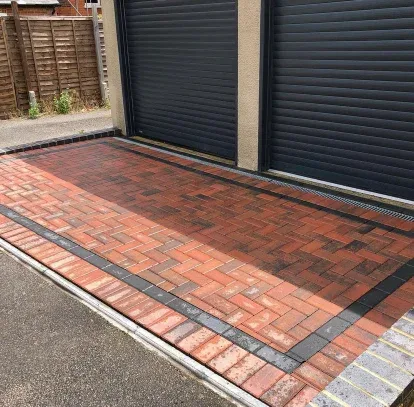
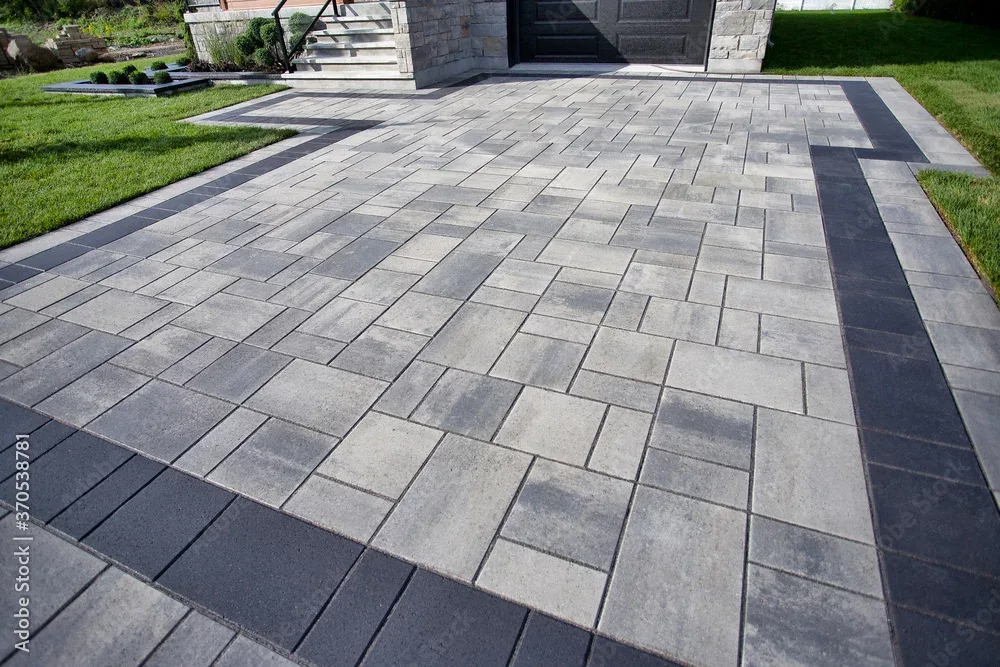
Block paving projects
FAQs
Block paving questions
Still unsure about something? Call us and ask — we would rather answer questions before a quote than after.
Which laying pattern is strongest?
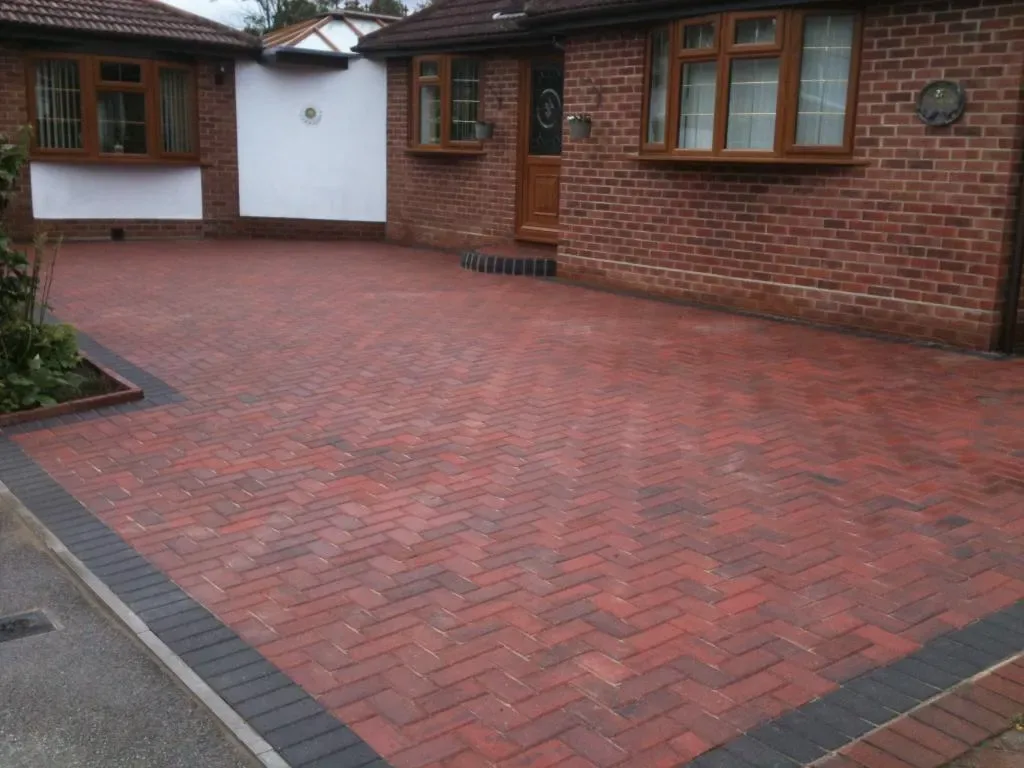
Herringbone, laid at 45 degrees to the main direction of traffic. The interlocking pattern transfers wheel load sideways into surrounding blocks instead of letting individual units rotate. Ninety-degree herringbone is nearly as good. Stretcher bond and basketweave look smart but have continuous joints that can creep, so we keep those for paths, patios and borders rather than the trafficked centre of a driveway.
Why does block paving get weeds?
Weeds grow in the joints, not up through the paving. Airborne seed lands in the sand, collects a little organic debris and germinates. Kiln-dried sand needs topping up periodically; a polymeric or resin jointing compound resists it far better and also stops ants excavating the joints. Keeping the surface swept and treating it once a year deals with most of the problem.
Can sunken or rutted block paving be repaired?
Yes, and that is one of block paving’s real advantages. If the sub-base is sound, the affected blocks are lifted, the laying course is re-screeded and the same blocks go back down — you would struggle to see the repair. If the ruts are caused by a failed or under-specified sub-base, relaying the top will not last; that area needs taking up and rebuilding properly.
Should block paving be sealed?
It is optional. Sealing helps resist oil staining, stabilises the joint sand and can lift the colour, but it needs redoing every few years and traps any staining underneath if it is applied to a dirty surface. If you do seal, wait until the paving has weathered for a few months and any efflorescence has cleared, then use a breathable sealer suited to concrete blocks.
Related services
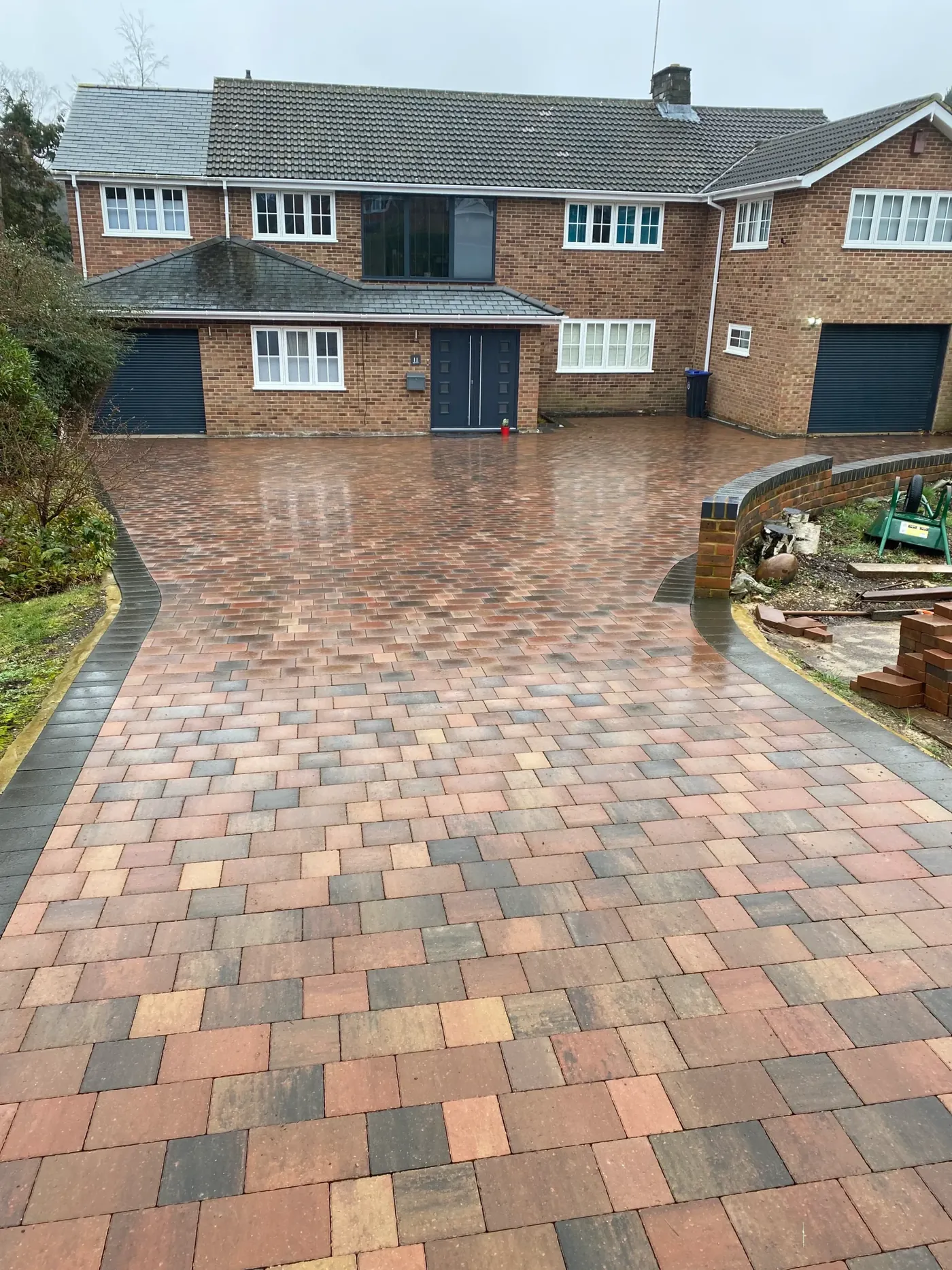 DrivewaysBlock paving, resin bound, concrete, gravel and tarmac driveways, fully excavated and drained.
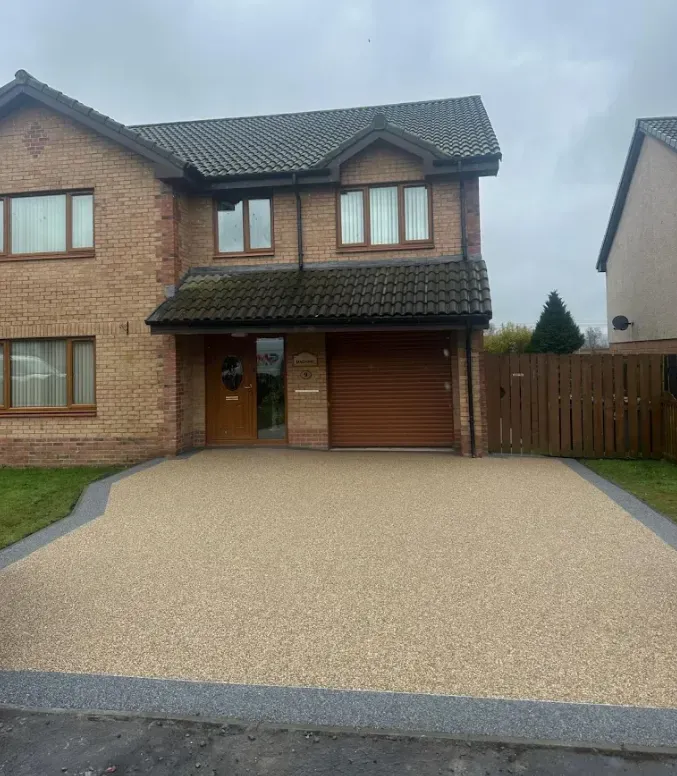 Resin DrivewaysUV-stable resin bound surfacing over a permeable or bound base, laid seamless and trowel finished.
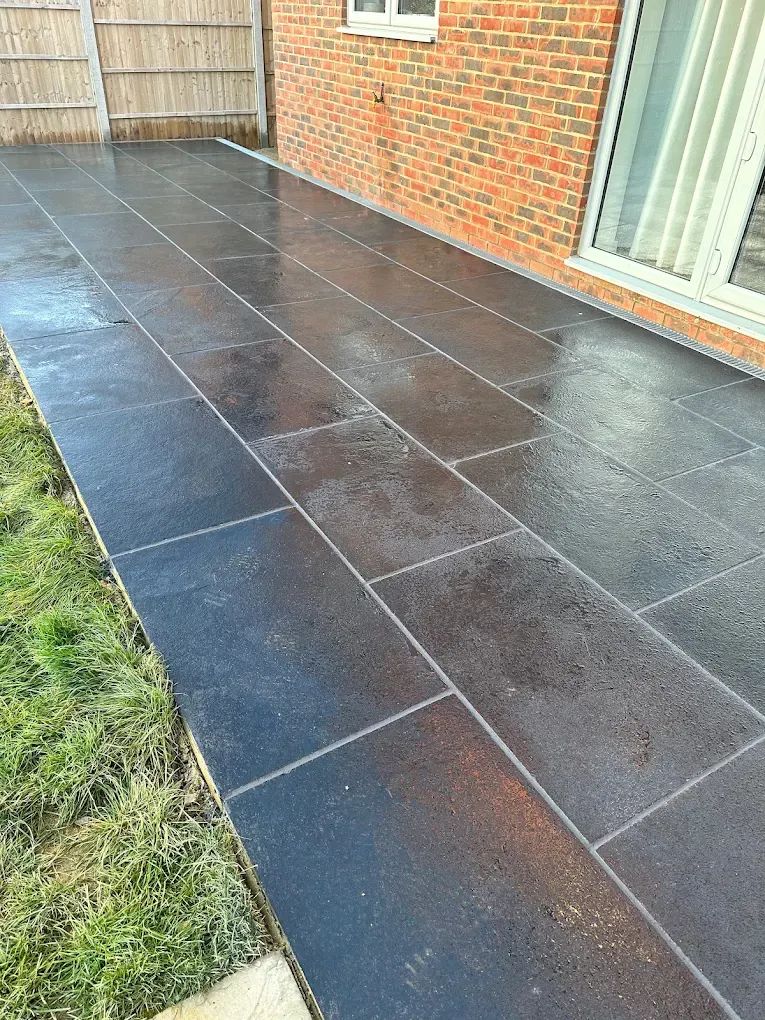 PavingPaths, garden paving, slabs and stone laid on a full mortar bed with correct falls and joints.
Planning a new driveway or patio in Portsmouth?
Send over a few details and we will arrange a site visit, measure up and give you an itemised written quotation.
Call 07881 365851 or email portsmouthdrivewaysandpatios@gmail.com.