Driveways Portsmouth
Driveway Installation in Portsmouth
New driveways built from the formation up — excavation, sub-base, edge restraints, drainage and your chosen surface, installed by our own team across Portsmouth and Portsea Island.
What a properly built driveway is made of
Almost every failed driveway we are called out to look at failed below the surface. Blocks rock because the laying course was too thick. Ruts appear because the sub-base was never compacted in layers. Edges spread because the restraint was bedded on sand instead of haunched in concrete. The surface material gets the blame, but the structure underneath is usually the culprit.
A driveway we build has four parts. First, the formation: everything soft, organic or contaminated is dug out and carted away until we reach ground that will carry load. Second, the sub-base: MOT Type 1 laid and whacked in 75–100mm layers rather than dumped in one go — depth depends on the subgrade and what will park on it. Third, restraint: kerbs or edge blocks set on concrete with a haunch behind them, so the paving cannot creep sideways. Fourth, the surface and its laying course, set to falls that take water where we want it.
Choosing a driveway surface
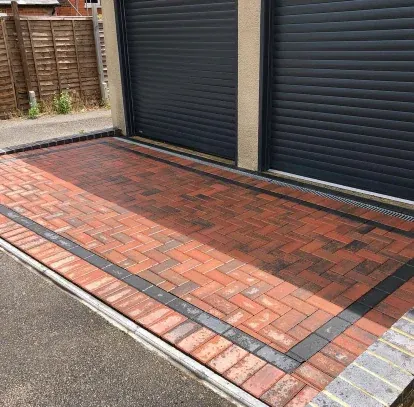
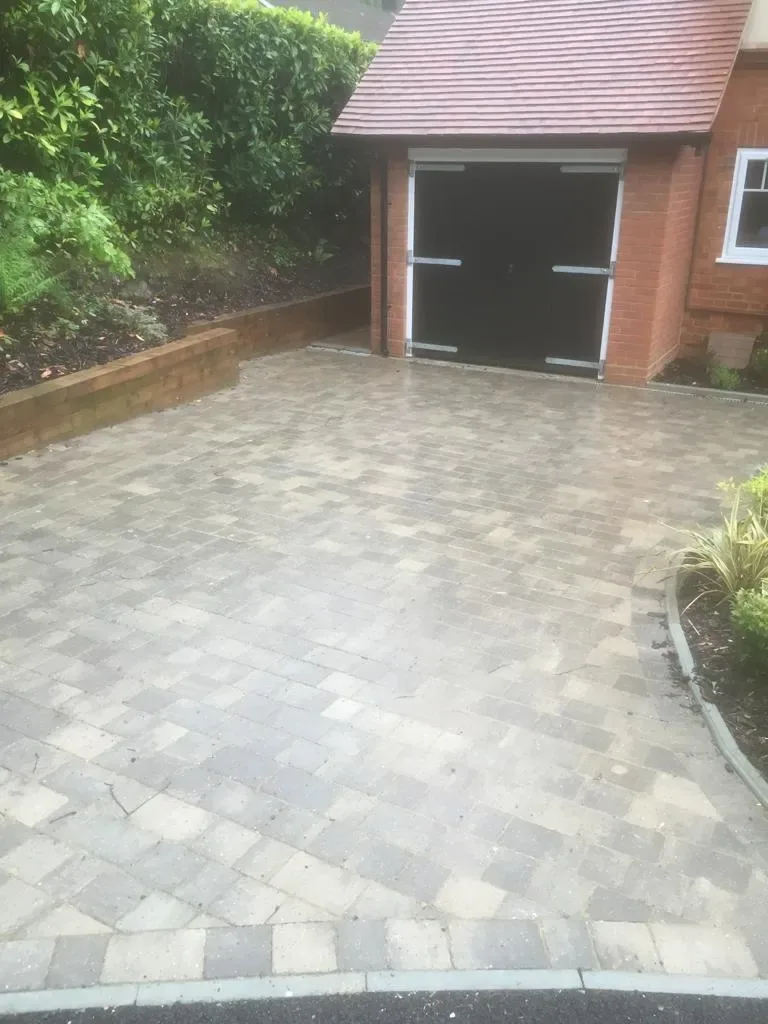
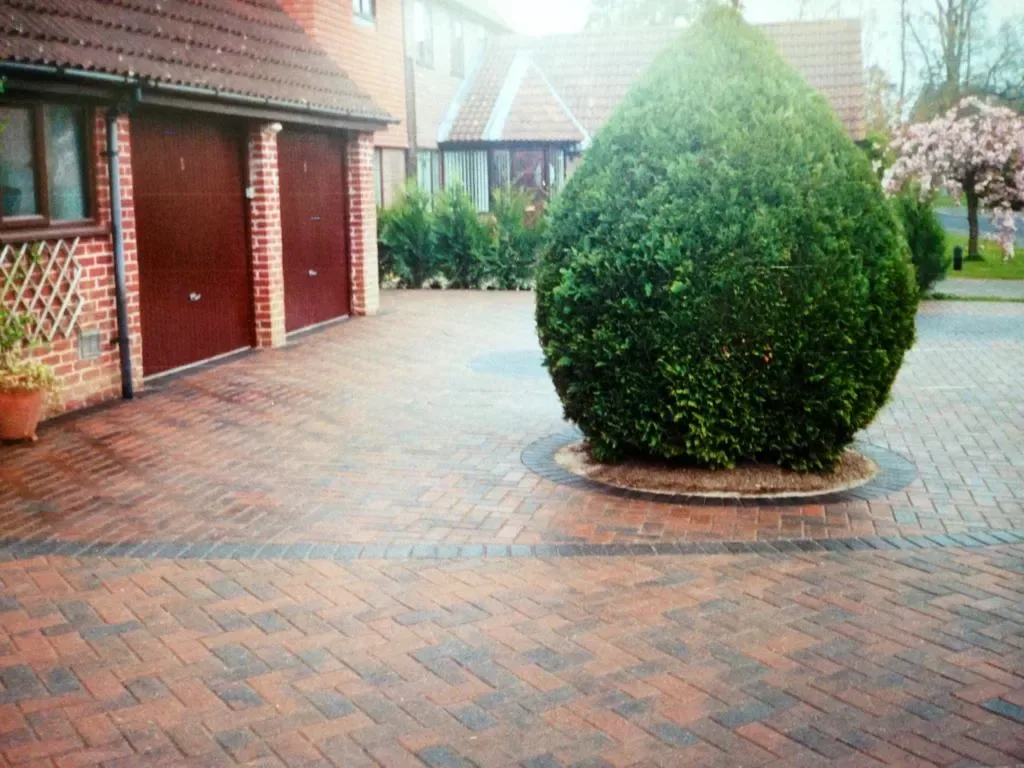
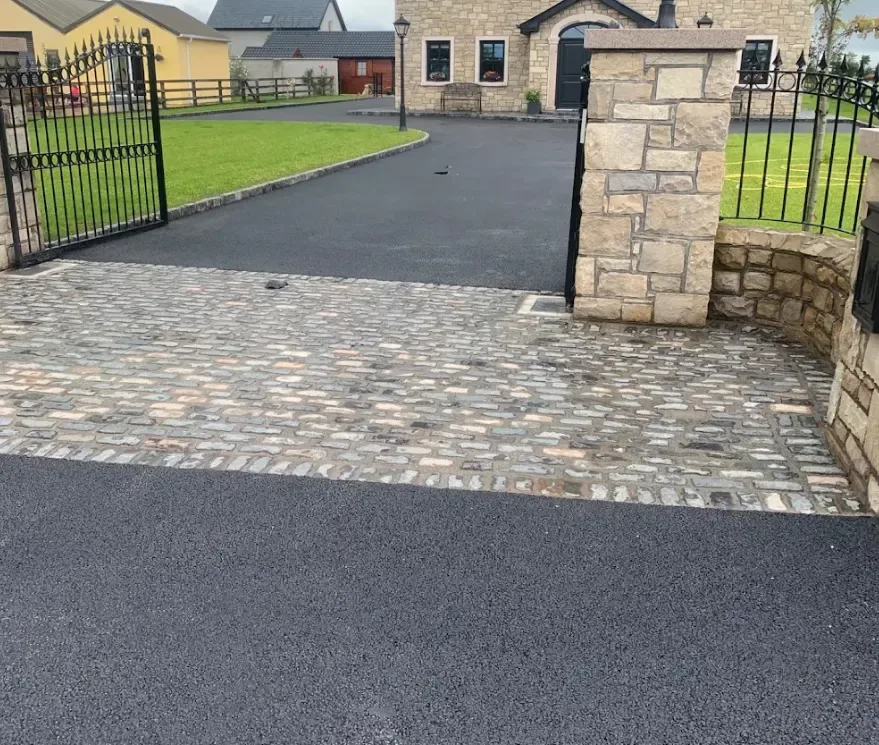
Block paving is the default for good reason. It interlocks under wheel load, individual blocks can be lifted and relaid if a utility company digs a trench, and borders and inlays let you tidy an irregular plot. Herringbone laid at 45 degrees to the direction of traffic resists creep better than any other pattern.
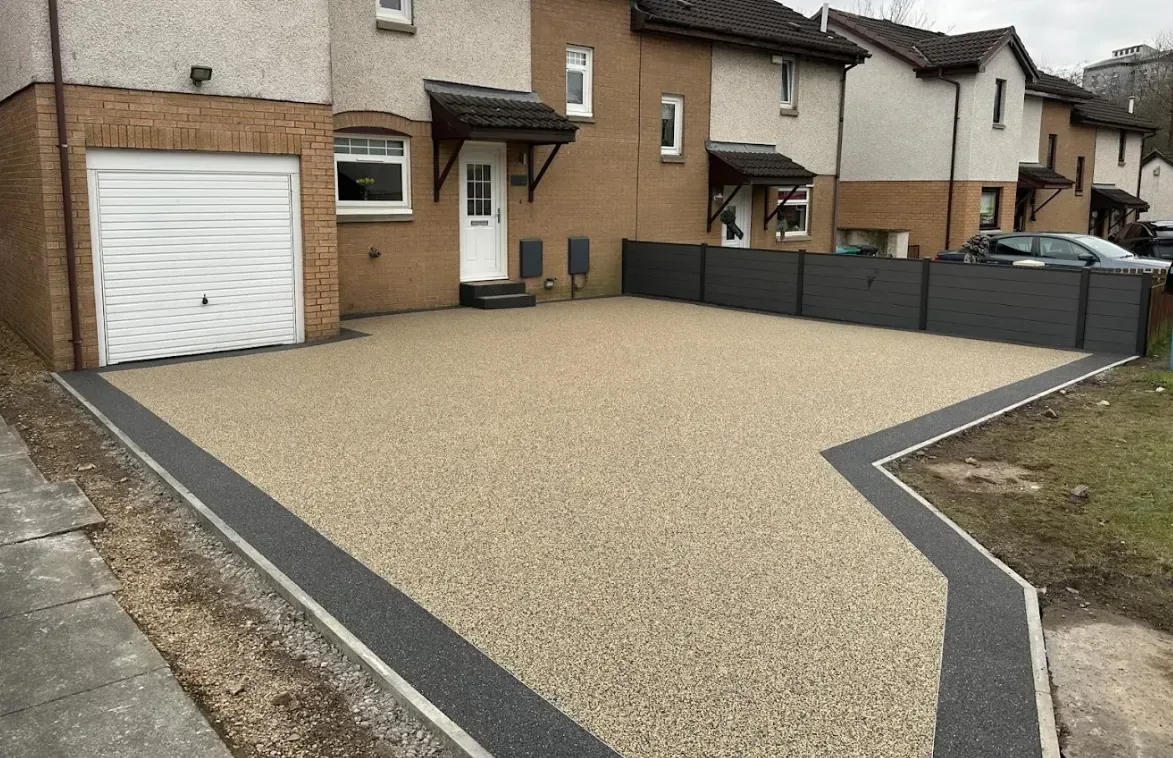
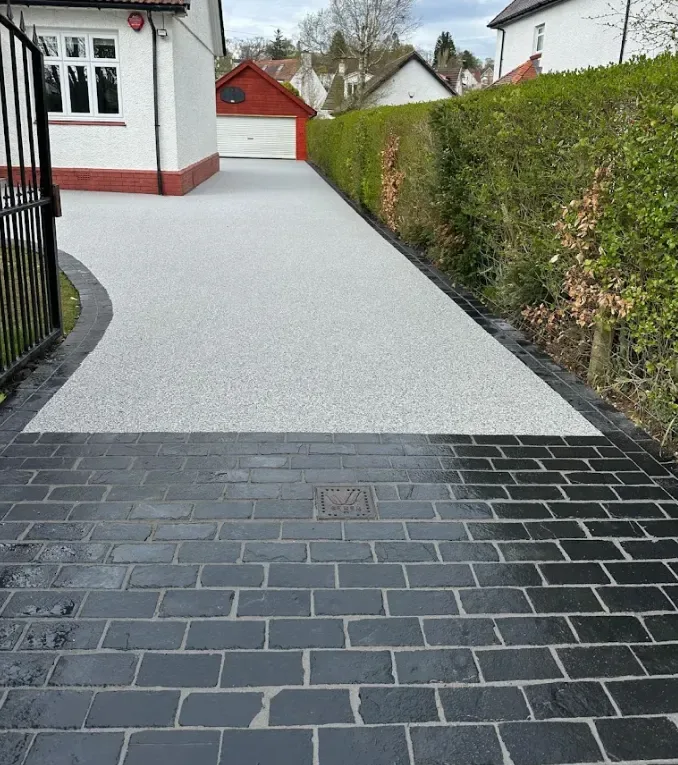
Resin bound gives a smooth, seamless, permeable surface with no joints to weed. It is comfortable for wheelchairs, pushchairs and bins, and it sweeps clean. It does, however, depend entirely on the base underneath, so it is only as good as the tarmac or concrete it is trowelled onto.
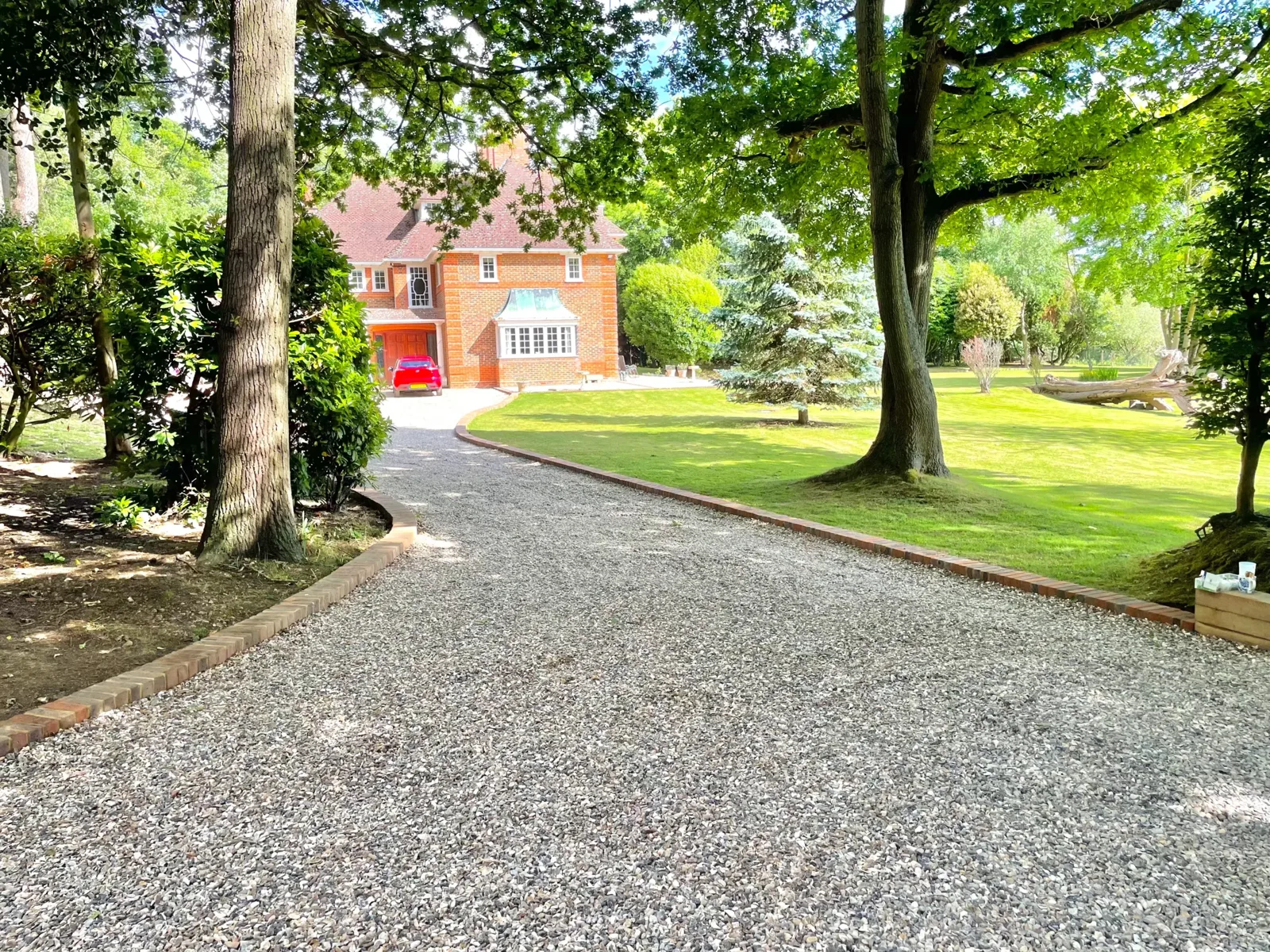
Concrete is the toughest option for heavy or constant use, especially when reinforced and jointed properly. Gravel is the cheapest to install and drains freely, but it needs a retaining edge and a stabilising grid if it is not going to end up on the pavement. We are happy to talk you out of a material that will not suit the way you actually use the space.
Drainage: the part the regulations care about
Since 2008, laying more than five square metres of impermeable surface at the front of a house that drains straight onto the road needs planning permission. Keep the surface permeable — or direct the run-off into a border, lawn or soakaway inside your own boundary — and permitted development normally applies.
In practice that means one of three approaches: a permeable block paving build-up using open-graded aggregate so water passes through the joints; a resin bound surface over a permeable base; or a conventional surface falling to a linear channel drain connected to an appropriate outlet. On the flatter, low-lying parts of Portsea Island we check ground conditions before relying on a soakaway, because a soakaway in ground that already holds water is no soakaway at all.
Working in Portsmouth streets
Access shapes the price and the programme. On a Victorian terrace in Fratton or Southsea there is often nowhere to stand a machine, so breaking out is done by hand and everything moves by barrow, which takes longer. In Cosham, Drayton and Farlington we can usually get a mini digger and a grab lorry close to the work, which brings the cost of muck-away down considerably. We look at all of this on the site visit so the quotation reflects your property rather than an average.
What your quotation includes
Every driveway quotation we issue sets out the excavation depth and area, the estimated tonnage removed and disposal, the sub-base specification, edge restraints, any drainage works, the surface material with its manufacturer and colour, and the making good around thresholds, manholes and gullies. If something might change once we open the ground — the classic being an old concrete raft or a buried oil tank — it is flagged before you sign rather than raised as an extra halfway through.
Ready to price up your project? Request a free site visit or read more about block paving and resin bound driveways.
Driveway installations
FAQs
Driveway questions from Portsmouth homeowners
Still unsure about something? Call us and ask — we would rather answer questions before a quote than after.
How deep should a driveway be excavated?
For a domestic car driveway on reasonable ground we normally dig to around 200–250mm below finished level, which allows for roughly 150mm of compacted MOT Type 1, a 30–50mm laying course and the block or slab thickness. Soft, made-up or clay ground needs more, sometimes with a geotextile separation membrane to stop the sub-base punching into the subgrade. Driveways that will carry a van or a caravan are dug deeper again.
Can you lay a new driveway over the old one?
Occasionally, if the existing surface is a sound, well-drained concrete or tarmac slab that is not cracked or moving — that can be a suitable base for resin bound. Far more often the old surface is failing, and overlaying it simply transfers the problem upwards while raising levels towards the damp proof course. We will tell you which situation you are in after digging a trial hole rather than guessing from the surface.
Do I need a dropped kerb?
If there is no existing vehicle crossing, you need consent from the highways authority before driving across the footway. That is a separate application from the driveway itself, and the crossing work is carried out to the council’s specification. We can build the driveway up to the boundary ready for the crossing to be installed.
How long before I can park on it?
Block paving can usually take vehicles the day after jointing, once the sand has been vibrated in. Resin bound needs to cure — normally light foot traffic after around six hours and vehicles after 24 to 48 hours depending on temperature. Concrete is the slowest: foot traffic after a couple of days and vehicles typically after seven days.
Will a new driveway add value to my house?
Off-street parking is genuinely valuable in Portsmouth, where residents’ permit zones and terraced streets make on-street parking difficult. We would not put a percentage on it, because that depends on the property and the market, but converting an unused front garden into a usable parking space is one of the more practical improvements available to a city home.
Related services
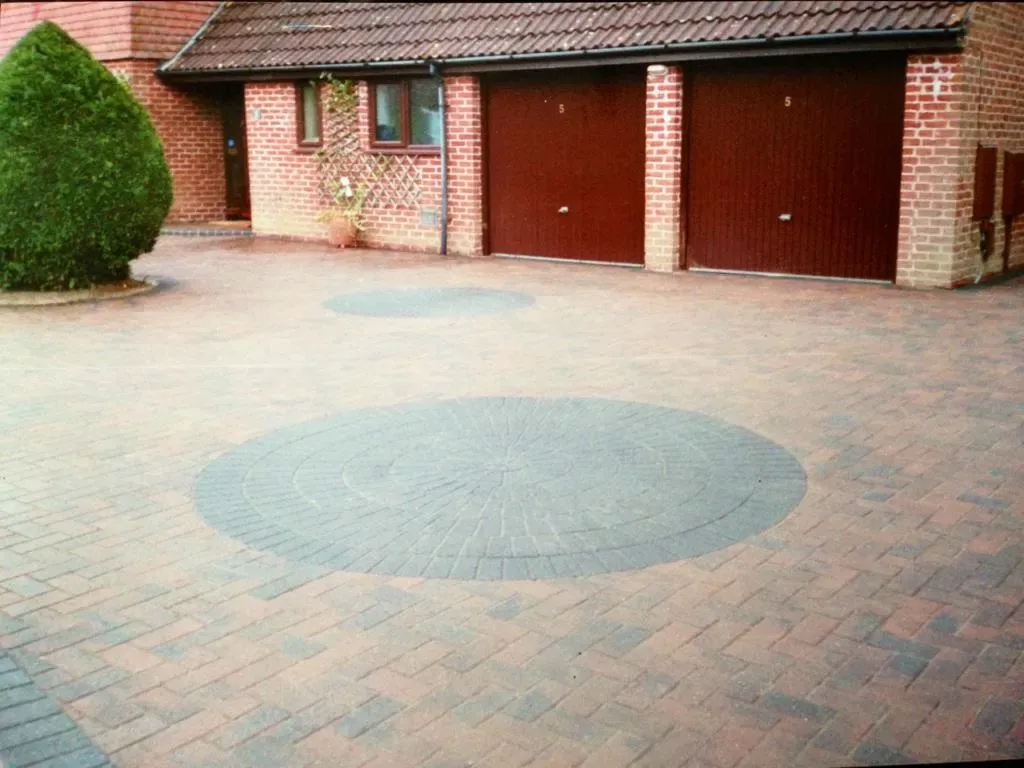 Block PavingHerringbone, stretcher and basketweave block paving with contrast borders and inlaid features.
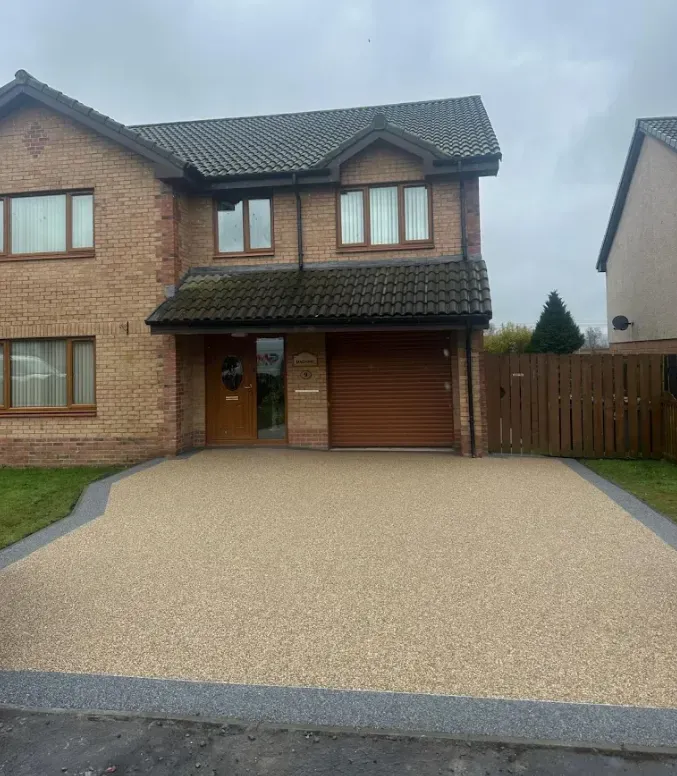 Resin DrivewaysUV-stable resin bound surfacing over a permeable or bound base, laid seamless and trowel finished.
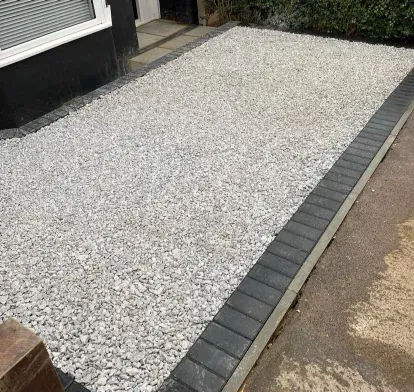 Concrete DrivewaysReinforced, air-entrained concrete with movement joints and brushed, patterned or exposed finishes.
Planning a new driveway or patio in Portsmouth?
Send over a few details and we will arrange a site visit, measure up and give you an itemised written quotation.
Call 07881 365851 or email portsmouthdrivewaysandpatios@gmail.com.