Paving Portsmouth
Paving in Portsmouth
Paths, garden paving, slabs and setts laid with the same care as our driveways — proper foundations, deliberate falls, restrained edges and joints that stay filled.
Paving is more than the slab on top
A path fails for the same reasons a driveway does: not enough excavation, an uncompacted base, no edge restraint and joints that were never properly filled. Foot traffic is gentler than a car, so the failure is slower — a rocking slab here, a sunken corner there — but the cause is identical.
We excavate to firm ground, lay and compact a granular sub-base, bed on a full mortar bed and restrain the edges, whether that is a haunched concrete edge against a border, a kerbline or an existing wall. Cuts are made cleanly with a disc, and the setting out starts from the most visible line — usually the house wall — so any cut course ends up where nobody looks.
Materials we work with
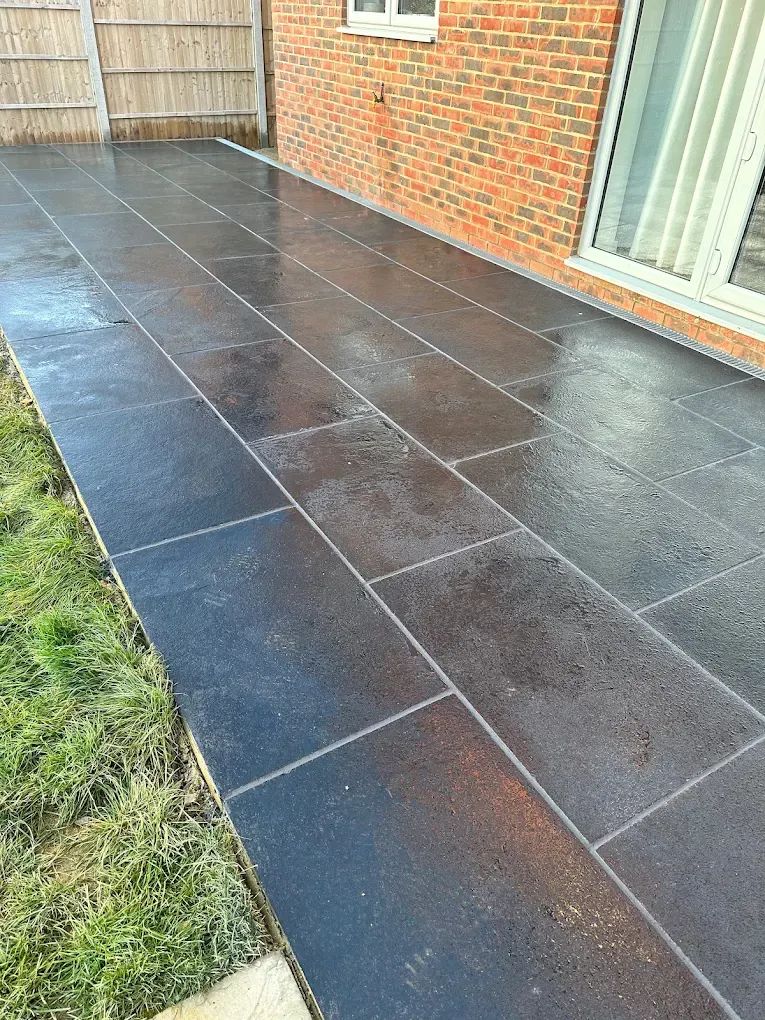
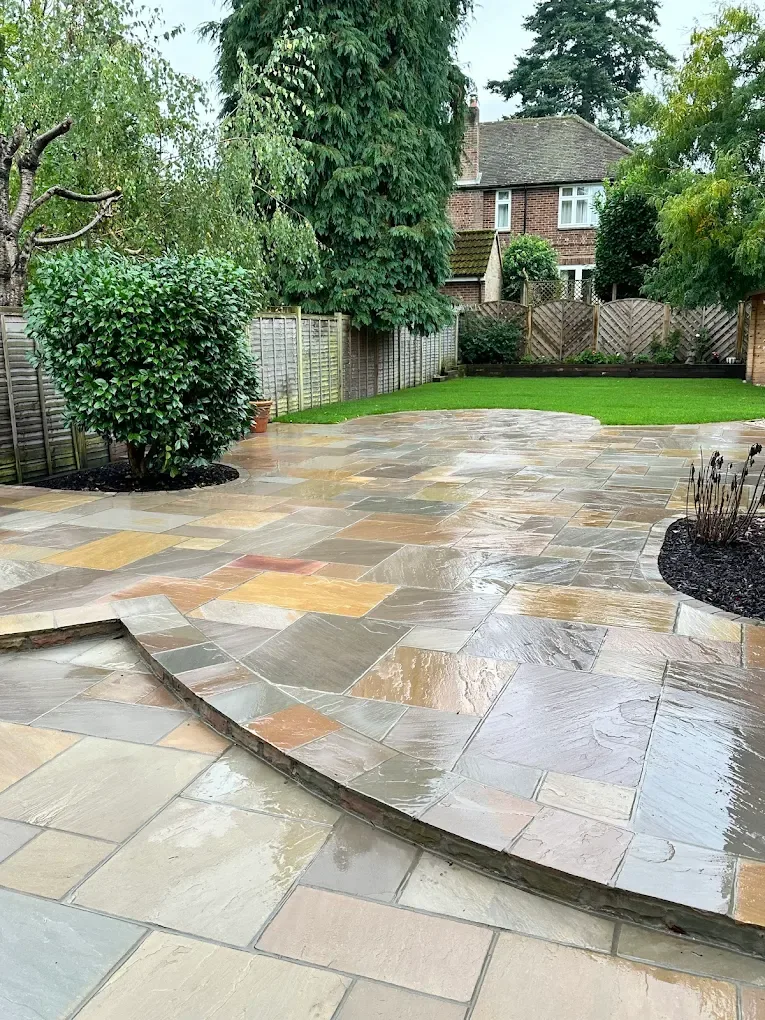
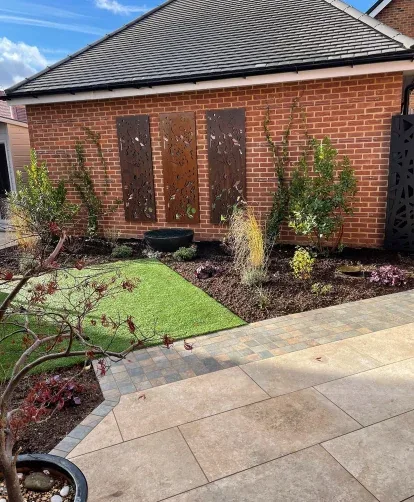
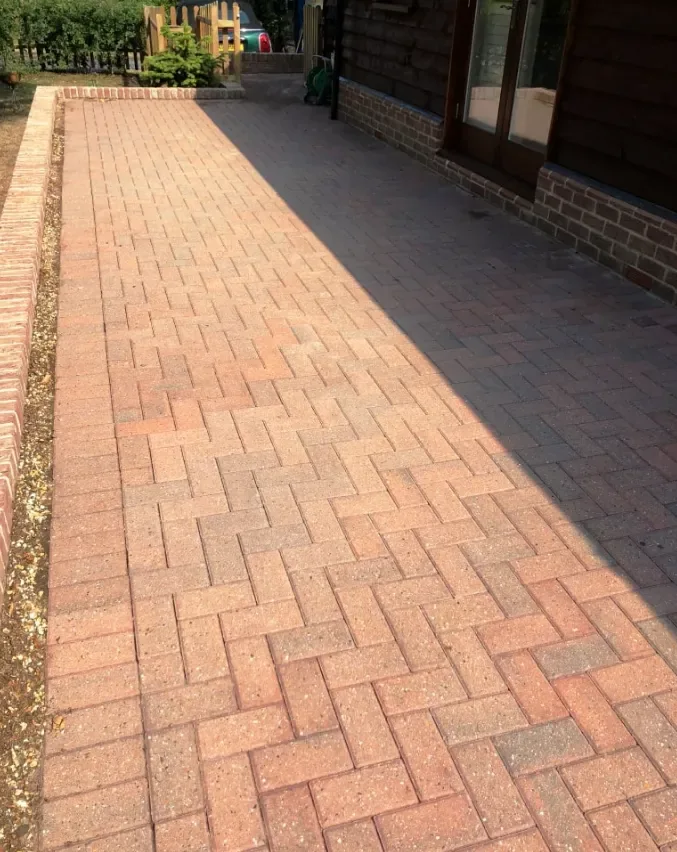
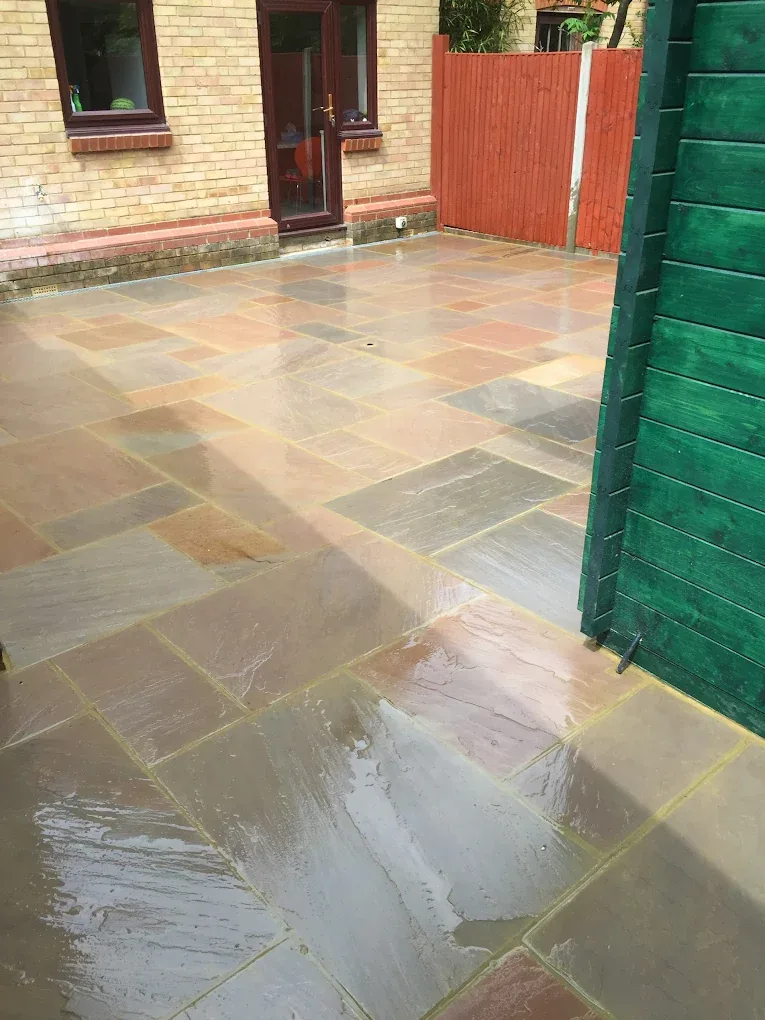
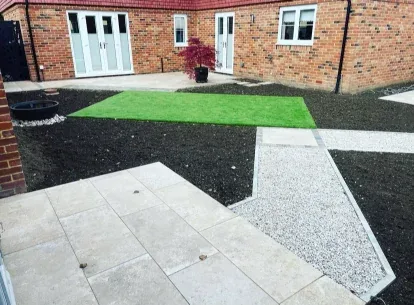
Natural stone slabs in sandstone, limestone, slate and granite, in single sizes or mixed-size project packs. Concrete paving in riven or smooth finishes, which offers consistent thickness and predictable cost. Porcelain where a clean, colour-stable modern line is wanted. Setts and cobbles for borders, curves and detail. And block paving where a path also has to take occasional vehicle loading.
Falls, drainage and levels
Every paved surface gets a designed fall — away from buildings, towards a border, channel or gully, never towards a neighbouring property. In tight side returns between terraced houses there is often only one place for water to go, and getting that decision right at setting-out stage is the whole job.
Where a path meets a door threshold we keep the finished level clear of the DPC and use a drainage channel if the levels are tight. Where it meets a lawn, the paving sits marginally below turf level so a mower can run over the edge without scalping.
Detailing that makes the difference
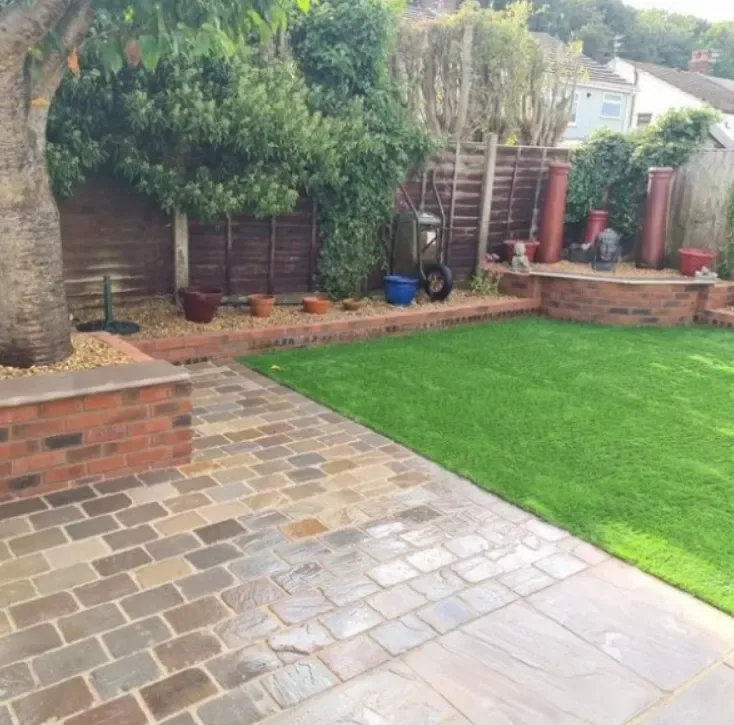
Small decisions carry a paved surface: a sett border to absorb the awkward cuts along an out-of-square boundary, a change of laying direction to stretch a narrow space, a stone threshold at a gate, planting pockets that stop a long path reading as a runway. We set out with string lines and dry-lay the first few square metres so you can see the pattern before anything is bedded down.
Get in touch with rough dimensions and we will arrange a visit.
Paving projects
FAQs
Paving questions
Still unsure about something? Call us and ask — we would rather answer questions before a quote than after.
How wide should a garden path be?
A single-person path works at 600–750mm, but 900mm is far more comfortable and lets two people pass or a wheelbarrow through without clipping the planting. Side access paths that bins are wheeled along should be at least 800mm clear of gate posts and meter boxes.
Which paving is least slippery?
Flamed granite, riven sandstone and textured porcelain all offer good grip. The bigger factor is usually algae, which forms on any surface that stays damp and shaded — a north-facing side return being the classic. Good falls, no ponding and an annual clean make more difference than the material choice.
Can you pave over an existing concrete path?
If the concrete is sound, unmoving and levels allow, yes — a bonded bed onto clean concrete is a legitimate build-up. The catch is height: adding 60–70mm can bring the finished surface too close to the damp proof course or leave an awkward step at a threshold. We check that before recommending it.
What are setts used for?
Granite or concrete setts make excellent borders, aprons, tree surrounds and transitions between two different surfaces. They cope with tight radii where a full-size slab would need endless cutting, and a sett course at the head of a driveway takes the wear where cars turn.
Related services
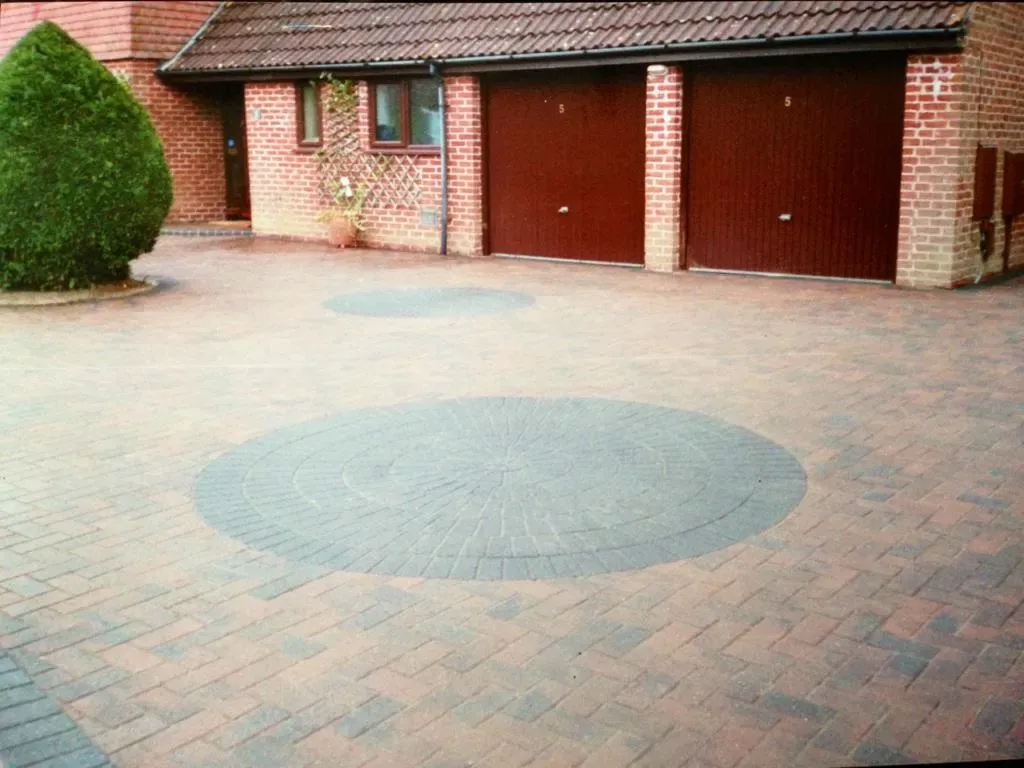 Block PavingHerringbone, stretcher and basketweave block paving with contrast borders and inlaid features.
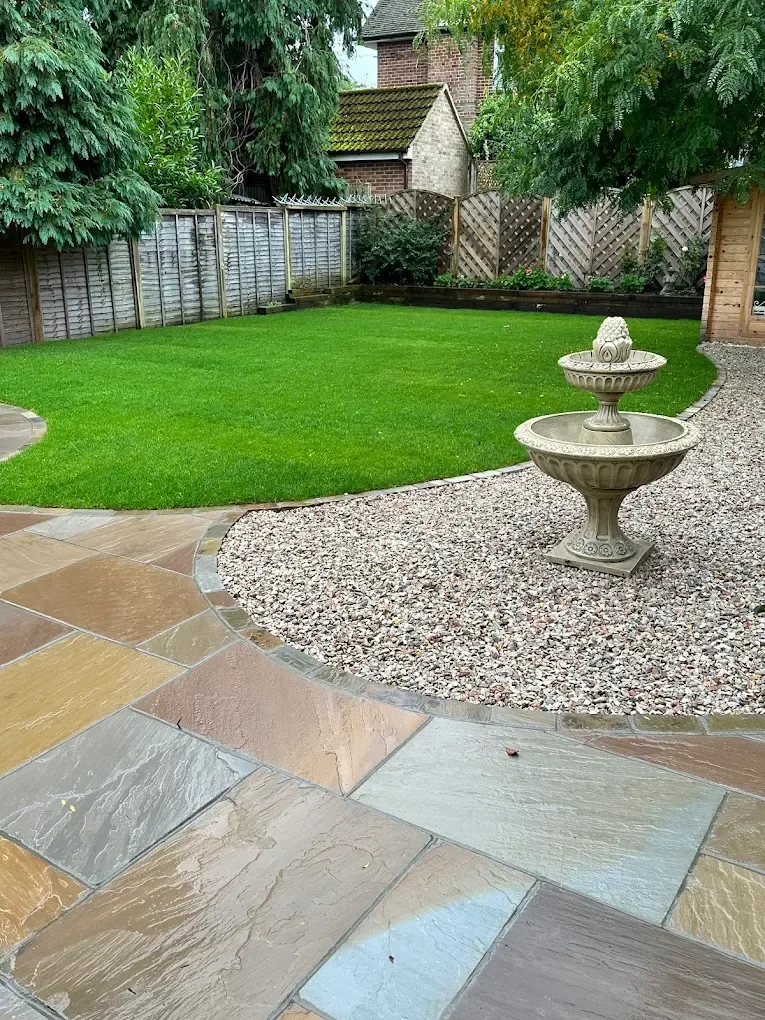 PatiosGarden terraces in porcelain, sandstone and limestone, with steps, edging and drainage detailed properly.
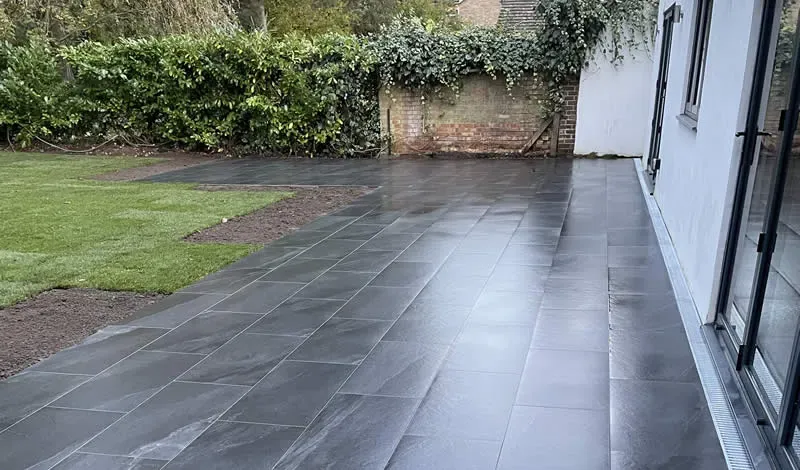 Porcelain PavingLarge-format vitrified porcelain on a primed slurry bond, for low-maintenance, colour-stable terraces.
Planning a new driveway or patio in Portsmouth?
Send over a few details and we will arrange a site visit, measure up and give you an itemised written quotation.
Call 07881 365851 or email portsmouthdrivewaysandpatios@gmail.com.