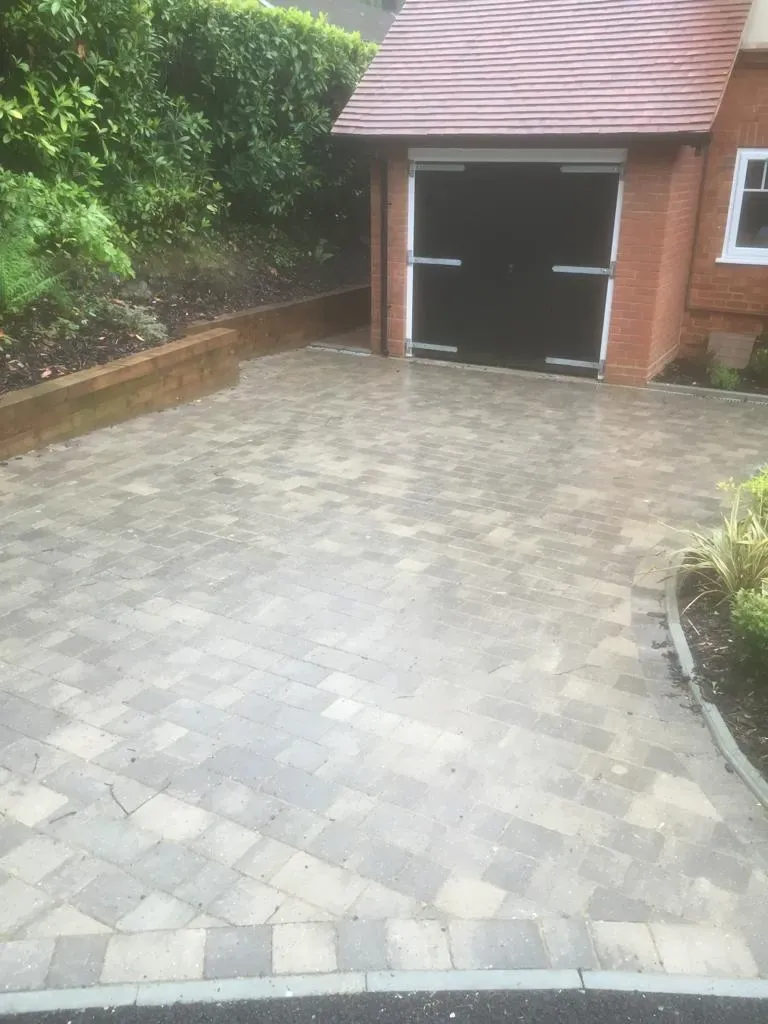
Porcelain Paving Portsmouth
Porcelain Paving in Portsmouth
Large-format vitrified porcelain laid the way it should be — full mortar bed, slurry-primed backs, tight tolerances and jointing matched to the slab.
Why people choose porcelain
Porcelain is fired at high temperature until it vitrifies, leaving a slab with water absorption typically under 0.5 per cent. Practically, that means it does not soak up barbecue grease, red wine or leaf tannin; it does not need sealing; it resists frost damage; and the colour does not fade in sunlight. Algae has far less to grip.
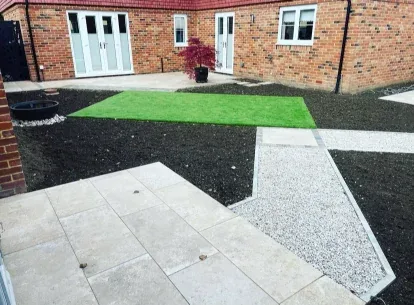
Slabs are also calibrated to a consistent thickness with rectified edges, so a finished terrace has narrow, even joints and a very flat surface — the look most people are after when they show us a photograph of a modern extension with bi-fold doors opening onto a terrace.
Formats and finishes
The common sizes are 600 x 600mm, 600 x 900mm and 800 x 800mm, with plank formats around 400 x 1200mm for a timber-effect run. Larger slabs give a calmer surface with fewer joints but need a flatter bed and are heavier to handle in a garden with restricted access.
Finishes imitate stone, concrete and timber convincingly. Mid-greys suit contemporary rendered extensions; warm beiges and sand tones sit better against Portsmouth’s traditional red and yellow stock brick. Matching internal tiles are available in most ranges if you want the floor to run through the doors and out onto the terrace at the same level.
How we install it
A compacted sub-base first, then a full mortar bed — never spot dabs. Each slab has a cement-based slurry primer brushed across its back immediately before laying, and it is tapped down onto the bed while the primer is still wet so a full bond forms. Joints are set with spacers, generally 4–6mm, and pointed with a suitable brush-in or trowel-applied compound once the bed has gone off.
Because rectified porcelain is unforgiving, setting out matters: we start from the most visible edge, plan cuts to fall at the least conspicuous boundary, and keep the fall consistent at around 1:80 away from the house so no water sits on a surface that shows every puddle.
Living with a porcelain terrace
Upkeep is a sweep and an occasional wash with warm water and a mild detergent. No sealing, no re-sanding, no colour fade. Avoid strong acids, which can etch the grout, and take care with metal furniture feet that can leave scuff marks on a pale slab.
Not sure between porcelain and natural stone? Read the patio page or ask us to price both.
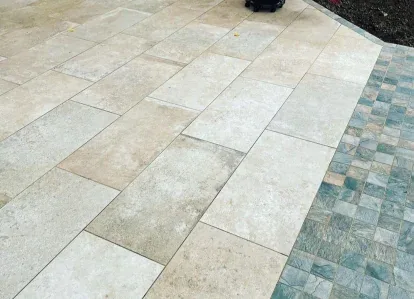
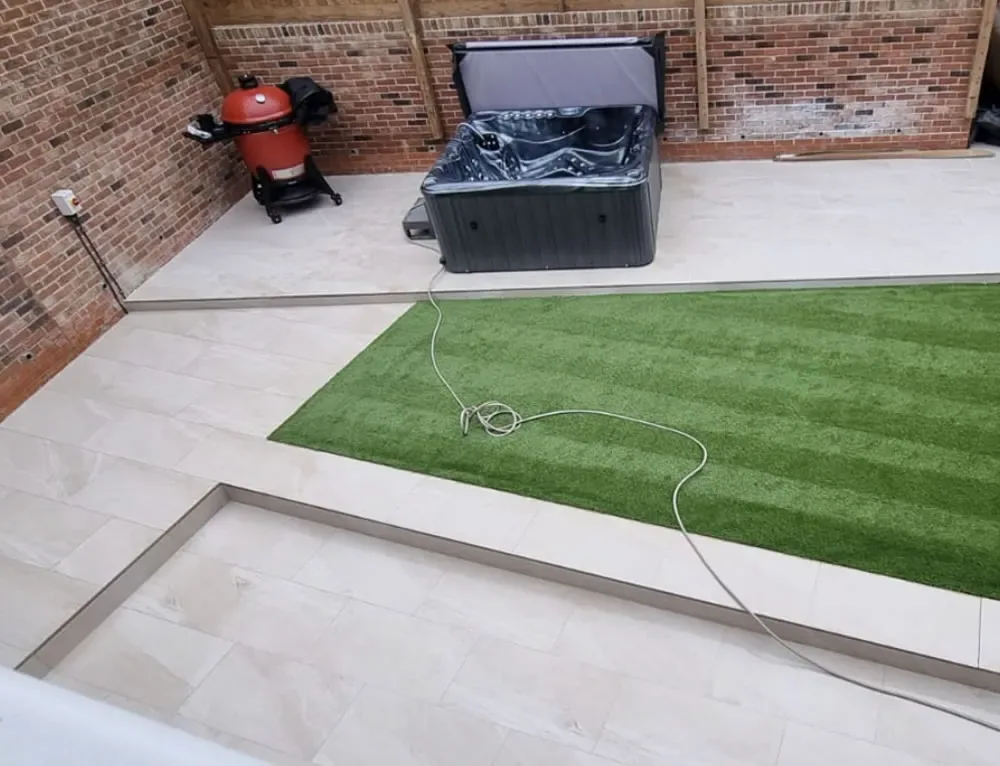
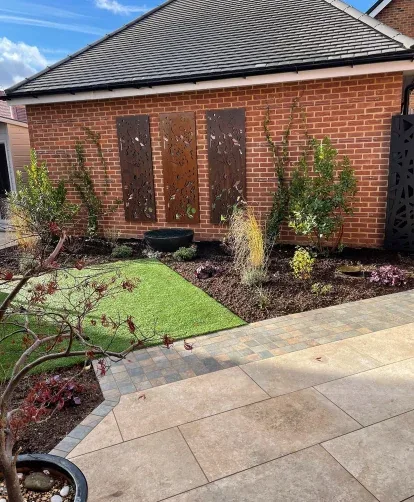
Porcelain projects
FAQs
Porcelain paving questions
Still unsure about something? Call us and ask — we would rather answer questions before a quote than after.
Is porcelain slippery when wet?
External porcelain is manufactured with a textured surface and is normally rated R11 or better for slip resistance, which is comparable to or better than smooth natural stone. Internal porcelain is not suitable outdoors — the two products look similar in a showroom but behave very differently in the rain.
Why does porcelain need a primer?
Porcelain is vitrified, so it absorbs almost no water and mortar cannot key into it the way it keys into sandstone. A cement-based slurry primer brushed onto the back of each slab creates that bond. Skip it and slabs work loose within a year or two — it is the most common porcelain installation failure.
Can porcelain be used on a driveway?
Only with a specific 20mm-plus driveway-rated product laid over a rigid, reinforced concrete base with a full bond. Standard patio porcelain will crack under vehicle load. In most cases block paving or resin is the more sensible driveway surface, and we will say so.
How is porcelain cut?
With a wet saw and a continuous-rim porcelain blade, cutting steadily and from the face side. It is slower than cutting stone and the waste factor is higher, which is reflected in the labour element of a porcelain quotation.
Related services
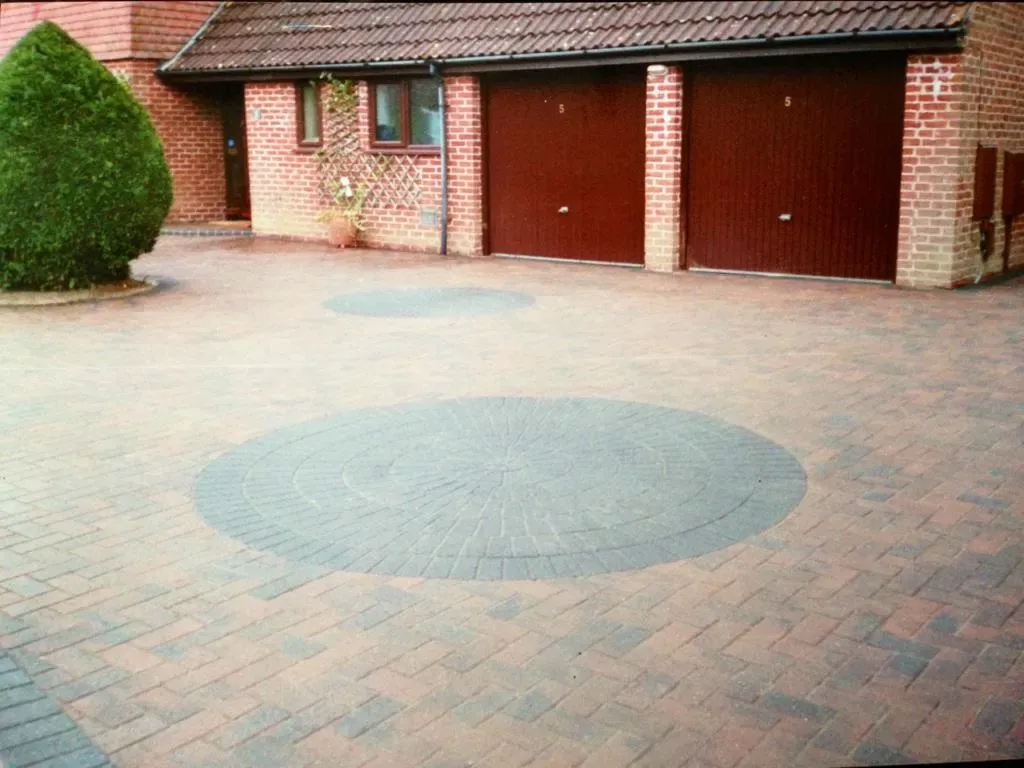 Block PavingHerringbone, stretcher and basketweave block paving with contrast borders and inlaid features.
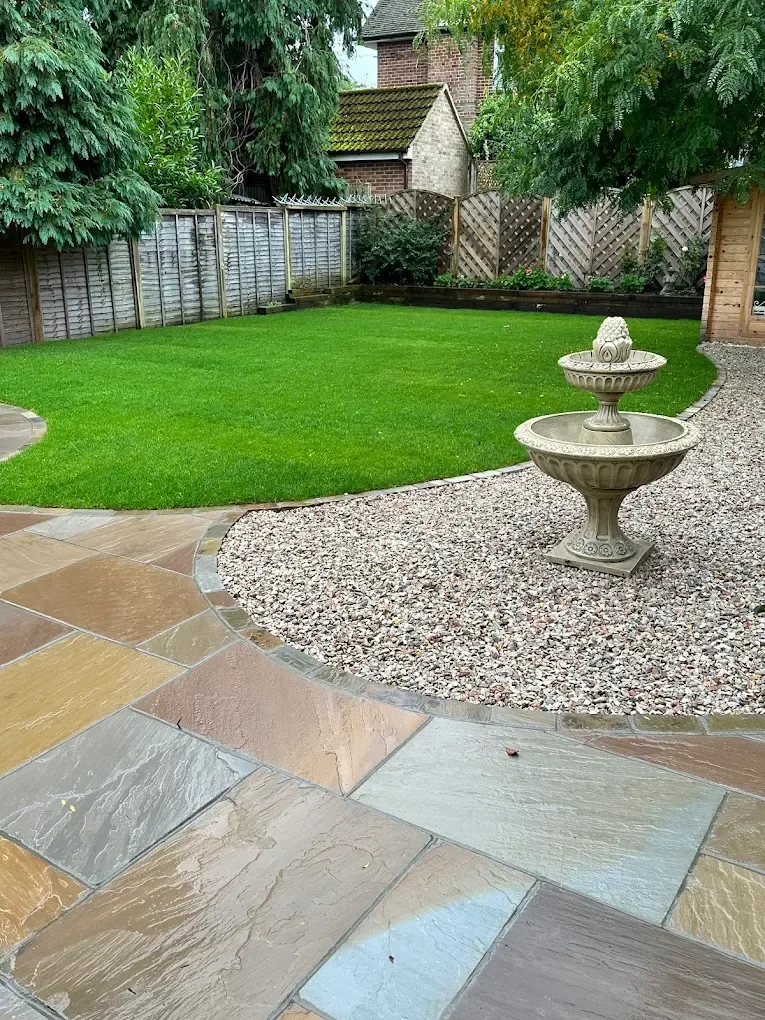 PatiosGarden terraces in porcelain, sandstone and limestone, with steps, edging and drainage detailed properly.
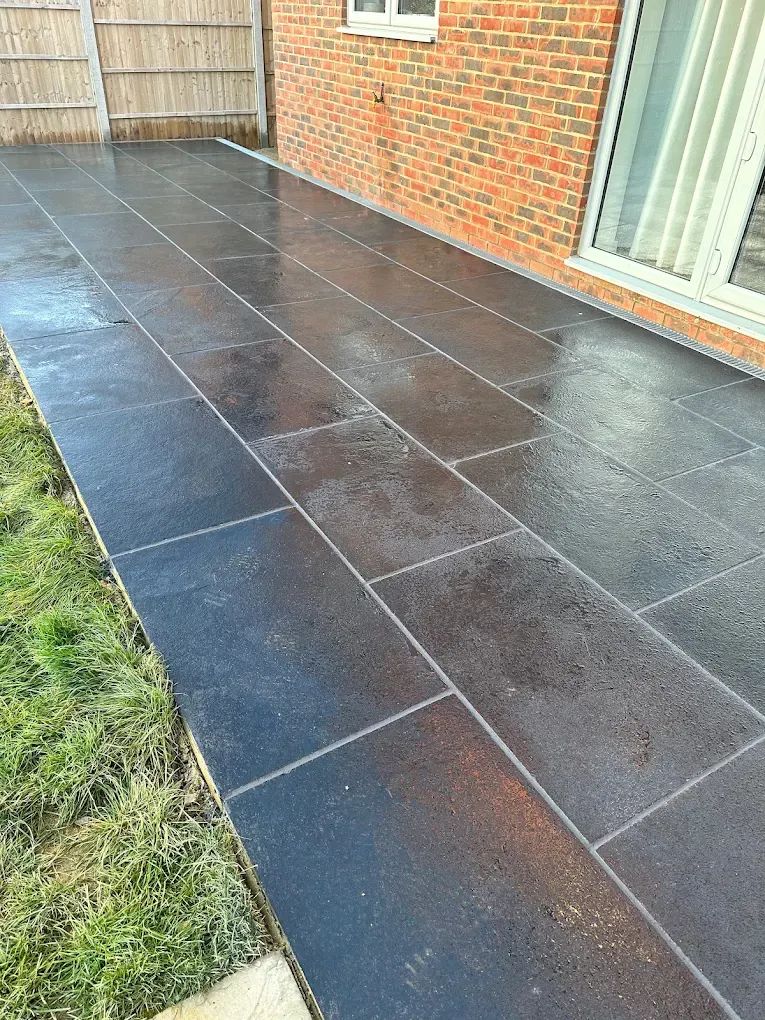 PavingPaths, garden paving, slabs and stone laid on a full mortar bed with correct falls and joints.
Planning a new driveway or patio in Portsmouth?
Send over a few details and we will arrange a site visit, measure up and give you an itemised written quotation.
Call 07881 365851 or email portsmouthdrivewaysandpatios@gmail.com.