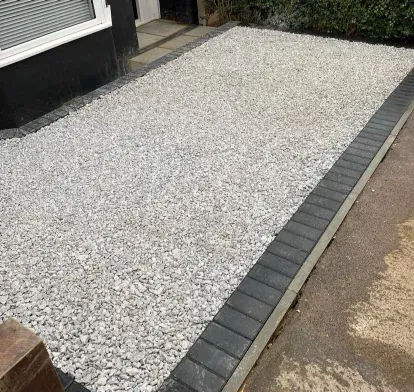
Gravel Driveways Portsmouth
Gravel Driveways in Portsmouth
Cost-effective, free-draining and quick to install — gravel driveways built on a compacted sub-base with proper edgings and, where you want a firmer surface, a stabilising grid to stop rutting.
Why gravel still works
Gravel is the most affordable way to cover a large frontage, and on the older properties around Old Portsmouth, Drayton and Portchester it often suits the house better than a modern block pattern. It drains freely, it can be laid quickly, and it makes an audible crunch that plenty of homeowners value for security.
Its weaknesses are all avoidable: scatter, rutting and weeds are symptoms of a shallow build-up and missing edge restraints, not of gravel itself.
How we build a gravel driveway
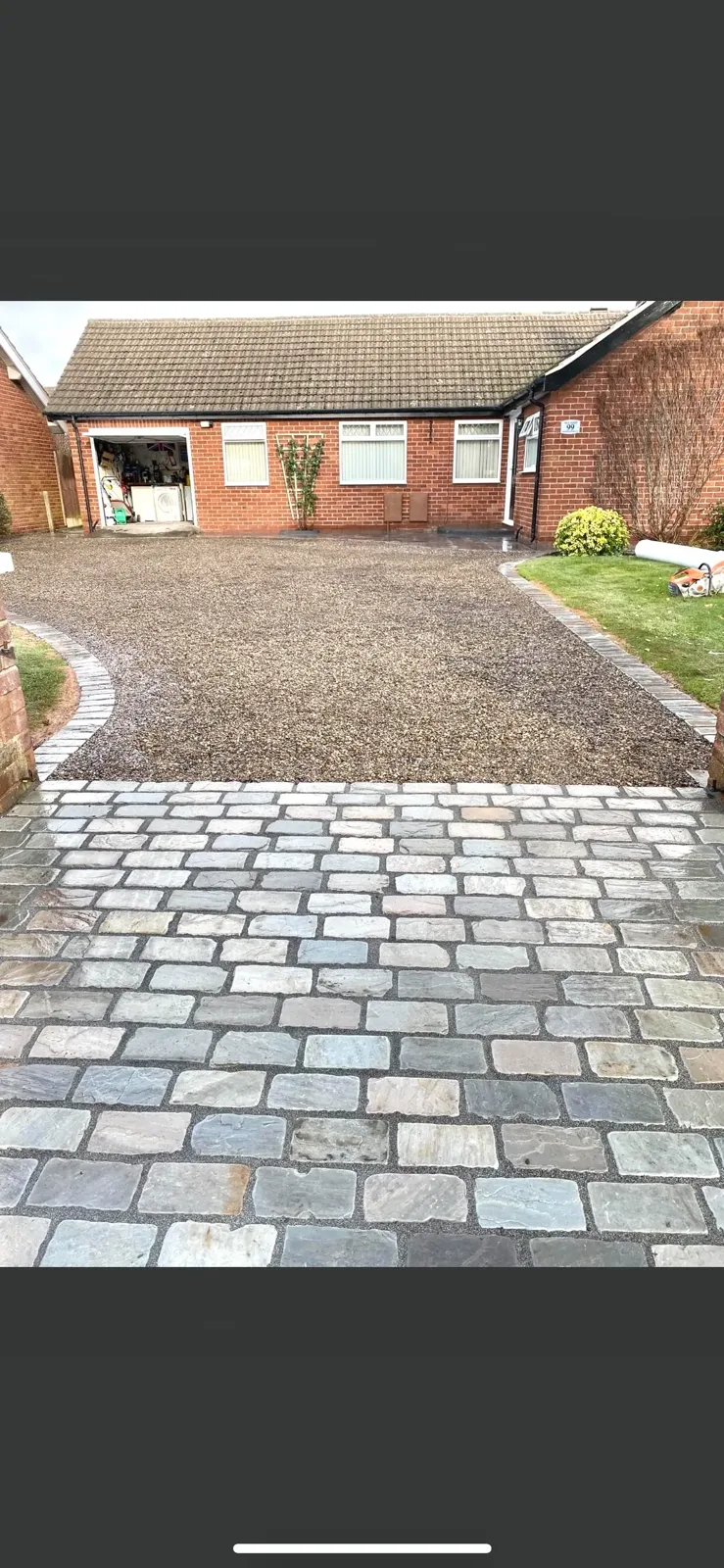
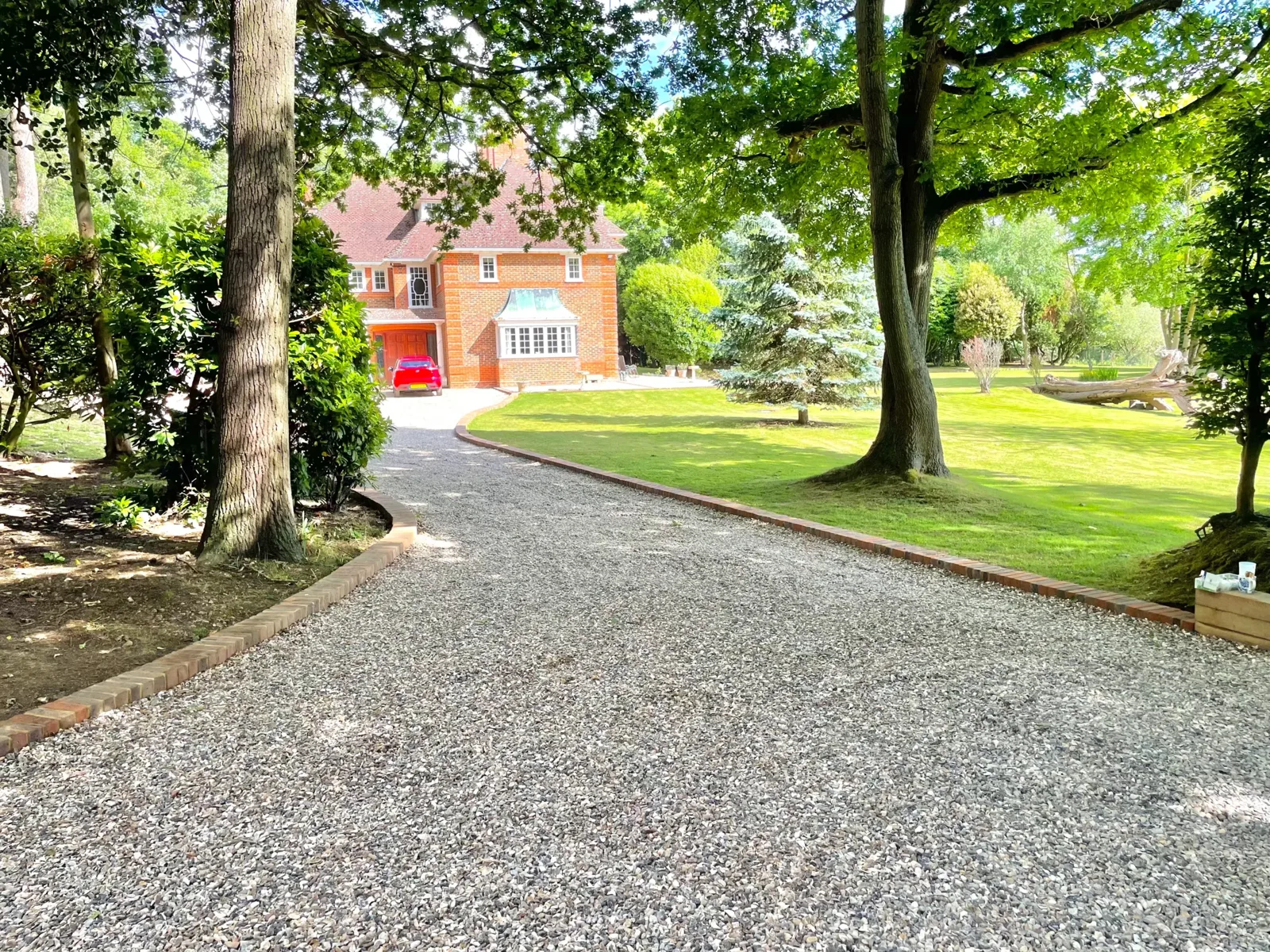
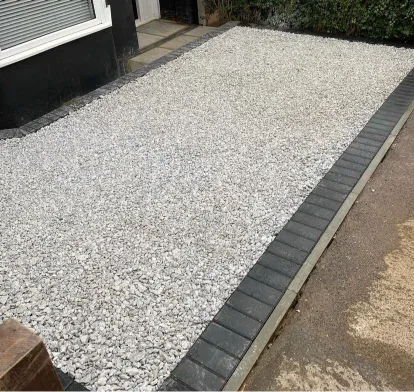
We excavate to a firm formation, lay a geotextile separation membrane, then compact a granular sub-base in layers. Edge restraints — block, sett, timber or steel — are bedded in concrete on every open boundary. The gravel itself goes on last, typically 30–40mm deep so the stone locks rather than swims.
Where the drive is sloped, used by heavy vehicles, or you simply want a firmer walking surface, we install a honeycomb gravel grid. The cells hold the stone in place, spread wheel loads and leave a level surface that is far kinder to pushchairs and wheelie bins.
Stone choices and detailing
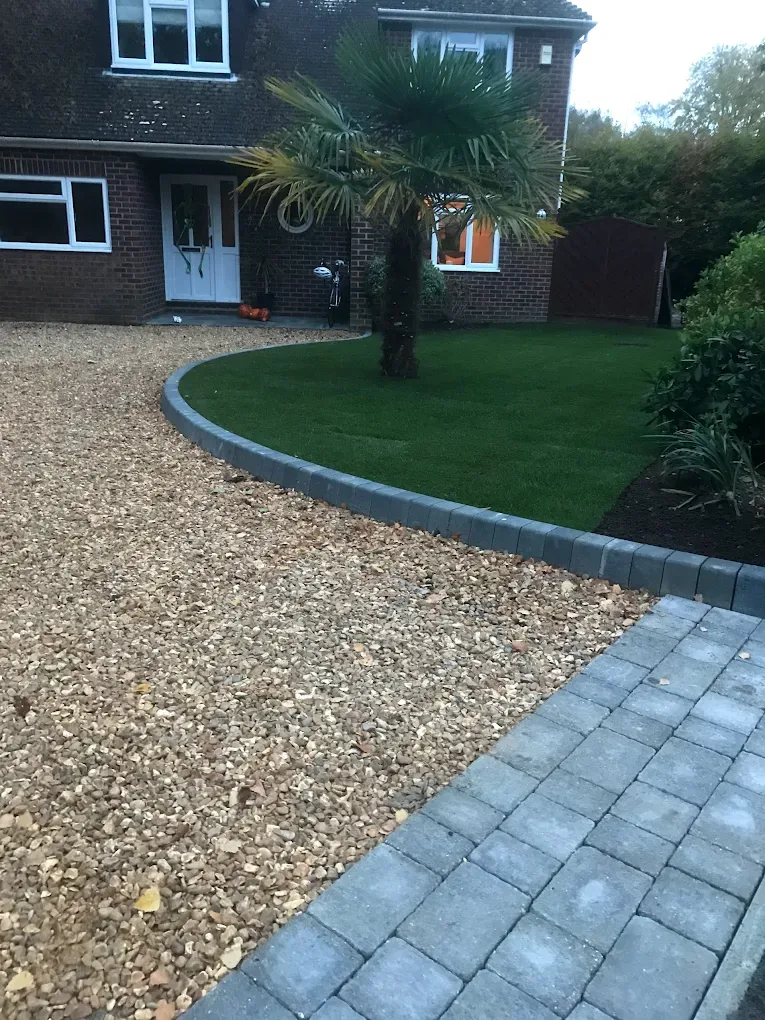
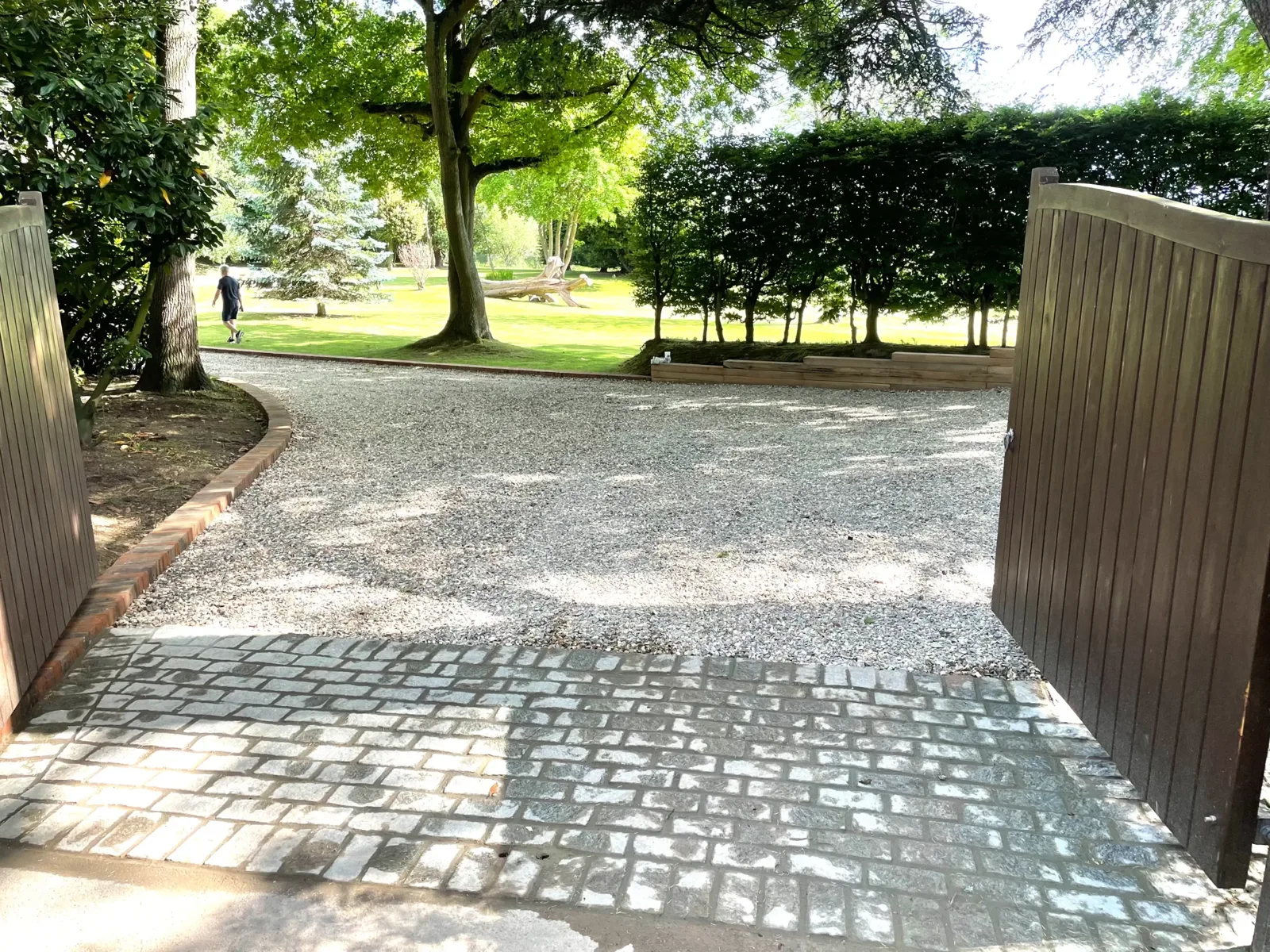
Angular 10–20mm chippings in golden, buff, silver or slate tones cover most tastes. A contrasting block or sett border sharpens the outline and gives a clean junction to lawn and pavement, and a bound apron at the entrance stops stone tracking onto the footway. If you later want to upgrade, the same base often carries resin bound surfacing.
Timescales
A typical domestic gravel driveway takes two to four days from breaking out to final rake, and it can be driven on immediately. Ask for a price and we will measure up and quote in writing.
Driveway surfaces
FAQs
Gravel driveway questions
Still unsure about something? Call us and ask — we would rather answer questions before a quote than after.
Does gravel need planning permission?
Loose gravel laid over a permeable build-up is one of the easiest surfaces to keep within permitted development, because rainfall soaks away within your own boundary rather than running onto the highway. We still design the falls and any soakaway properly.
Will the gravel migrate onto the pavement?
Not if it is built correctly. Edge restraints on every open side, a slight fall away from the entrance, and a stabilising grid under the top layer keep the stone in place. Rutting and scatter almost always come from gravel tipped straight onto soil with no restraint.
What size and type of stone is best?
A 10–20mm angular gravel locks together and stays put; rounded pea shingle rolls under tyres. Local favourites are golden gravel, Cotswold buff and silver-grey granite chippings — we bring samples so you can see them dry and wet.
How much maintenance does it need?
A rake over occasionally, a top-up of stone every few years, and an annual weed treatment. A geotextile membrane beneath the sub-base stops anything growing up from below, so weeds are only ever wind-blown seed sitting on the surface.
Related services
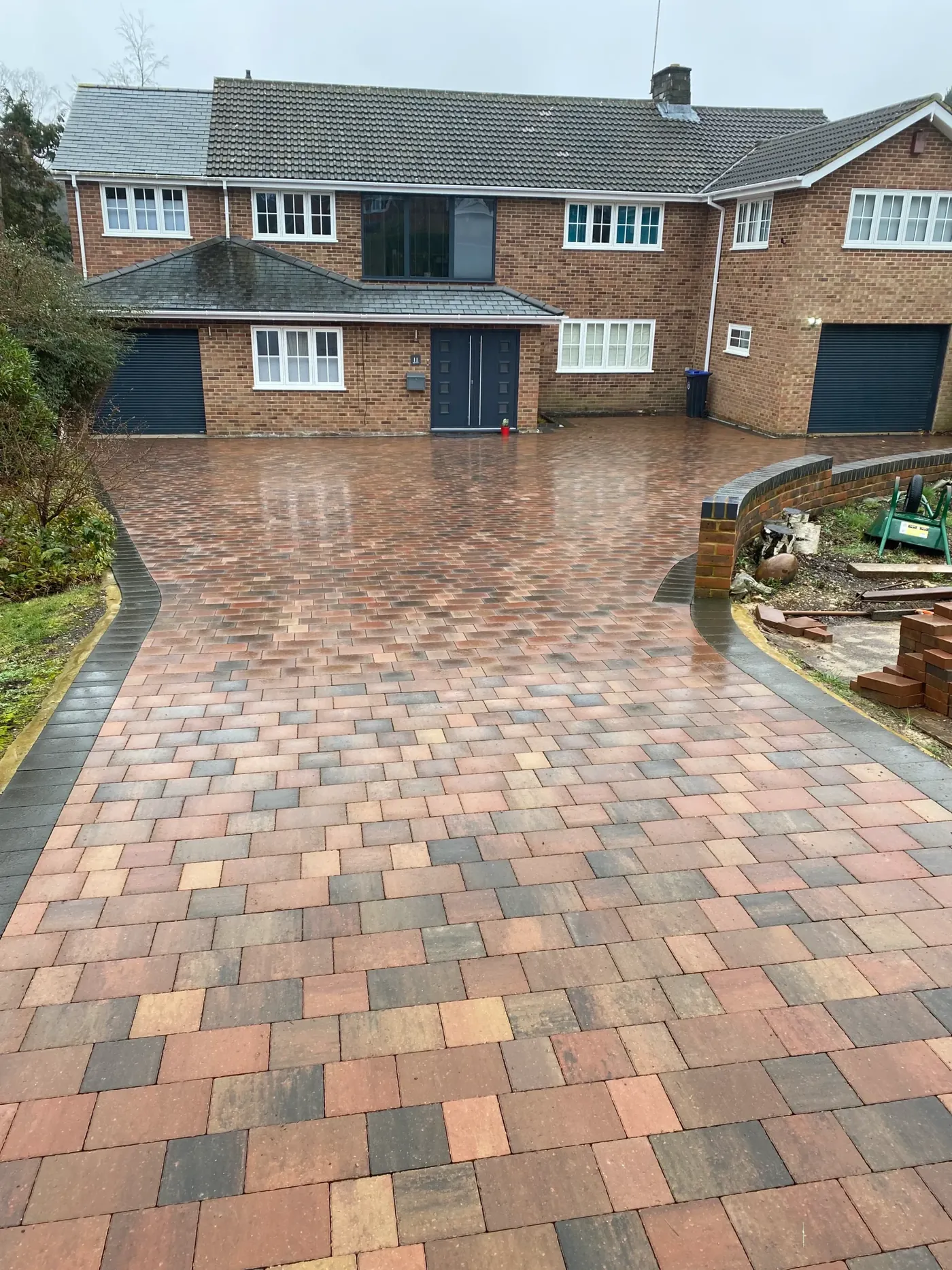 DrivewaysBlock paving, resin bound, concrete, gravel and tarmac driveways, fully excavated and drained.
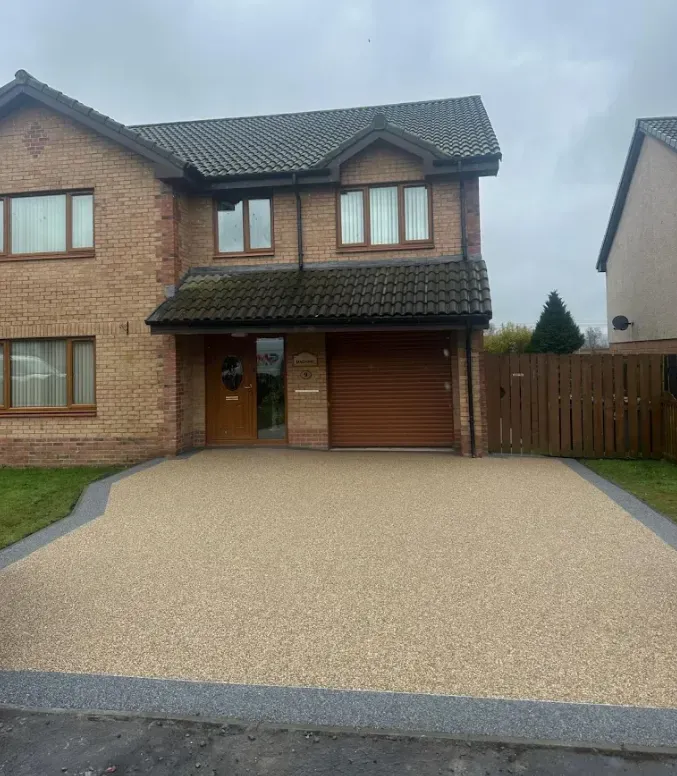 Resin DrivewaysUV-stable resin bound surfacing over a permeable or bound base, laid seamless and trowel finished.
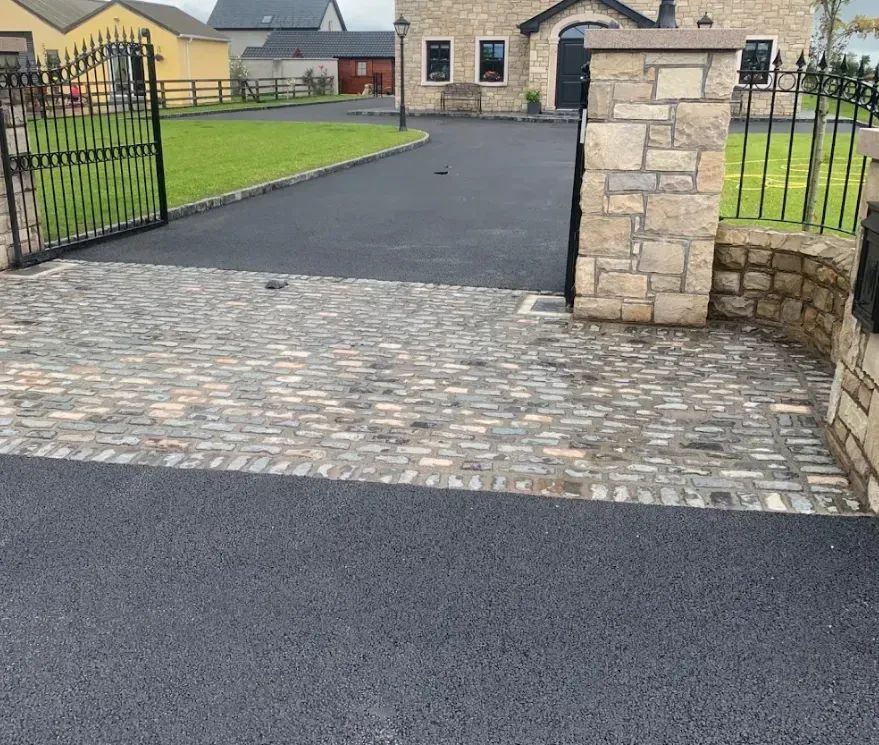 Tarmac DrivewaysMachine-laid asphalt base and wearing courses, rolled hot for a seamless, hard-wearing driveway surface.
Planning a new driveway or patio in Portsmouth?
Send over a few details and we will arrange a site visit, measure up and give you an itemised written quotation.
Call 07881 365851 or email portsmouthdrivewaysandpatios@gmail.com.