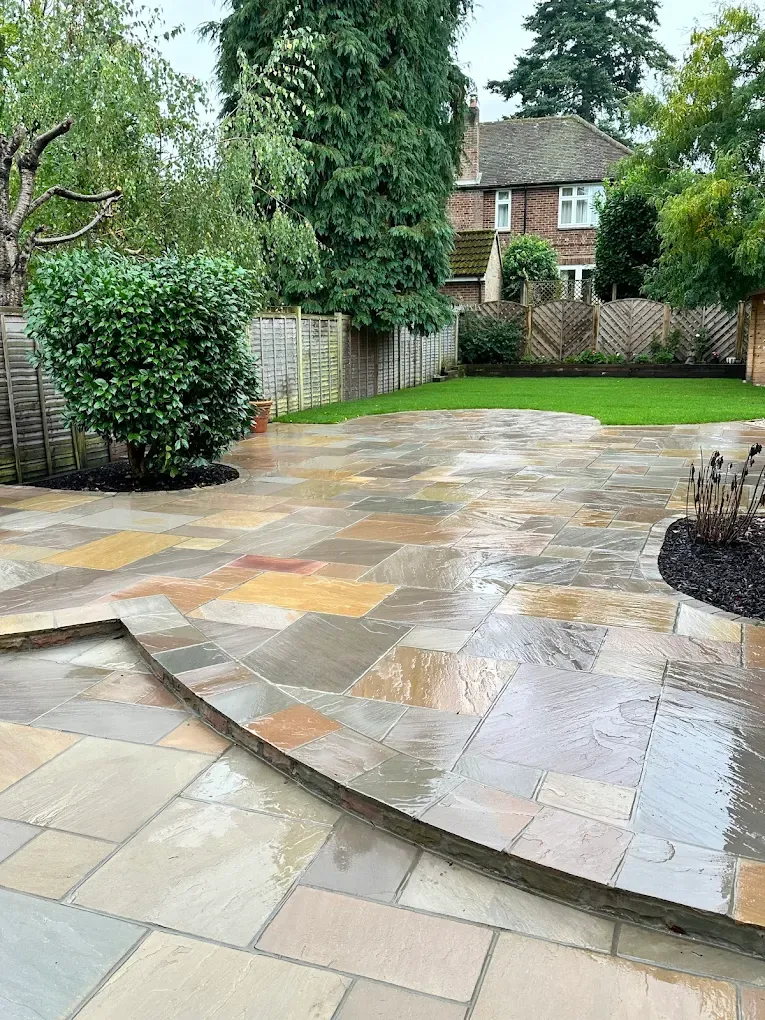
Patios Portsmouth
Patio Installation in Portsmouth
Garden terraces in natural stone and porcelain — set at the right level, laid to a proper fall on a full mortar bed, with steps, edging and drainage designed in from the start.
Designing a patio around how you use the garden
The first questions are practical, not aesthetic. Where does the sun fall in the late afternoon? Where will the table go, and is there room to pull chairs back without a leg dropping off the edge? Which door does everyone actually use? A terrace sized to the furniture you own is worth far more than one sized to a round number of square metres.
Portsmouth gardens are often small, walled and overlooked, which changes the design. A lighter stone bounces daylight into a narrow courtyard. Breaking the surface with a planting strip or a change of laying direction stops a small rectangle feeling like a yard. Raising a seating area by a single step gives it definition without eating the lawn.
Stone and paving options
Indian sandstone is the most popular natural stone: warm, riven, forgiving underfoot and available in mixed-size packs that break up the grid. Limestone is finer grained and more uniform, good for a calmer, more contemporary terrace. Granite is dense, hard and dark, with excellent slip resistance in a flamed finish.
Porcelain is a different proposition: vitrified, non-porous, colour-stable and easy to clean, but it needs a slurry primer and precise setting out because it cannot be cut and trimmed as casually as stone. We cover it in detail on the porcelain paving page.
Build-up, steps and retaining
Under a domestic patio we normally excavate to allow around 100–150mm of compacted sub-base and a 30–40mm mortar bed. Where the terrace sits on made ground or over a former border, the formation goes deeper until we reach something that will not settle.
Steps are built off a concrete foundation with a solid riser, not stacked on bedding sand. Low retaining walls in brick or block are built with a drainage void and weep holes behind them, so water pressure does not push them out over a couple of winters. Where the garden falls away, splitting the level into two terraces almost always looks better than a single sloping surface.
Jointing, sealing and upkeep
We joint with a brush-in compound matched to the joint width — a well-filled joint keeps water out of the bed and stops weeds getting a foothold. Sealing is optional on stone: it reduces staining from barbecues and planters and can deepen the colour, but it must be applied to a clean, dry, fully cured surface.
Beyond that, upkeep is a stiff brush, an occasional wash down and clearing leaf litter from shaded corners where algae forms. Avoid high-pressure washing at close range, which erodes joints and can pit softer stone. Have a look at completed terraces or ask for a quotation.
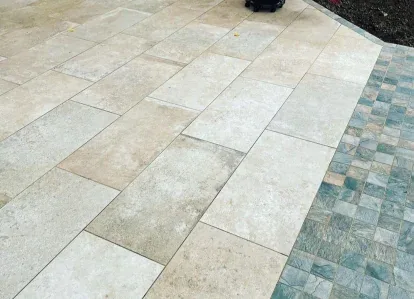
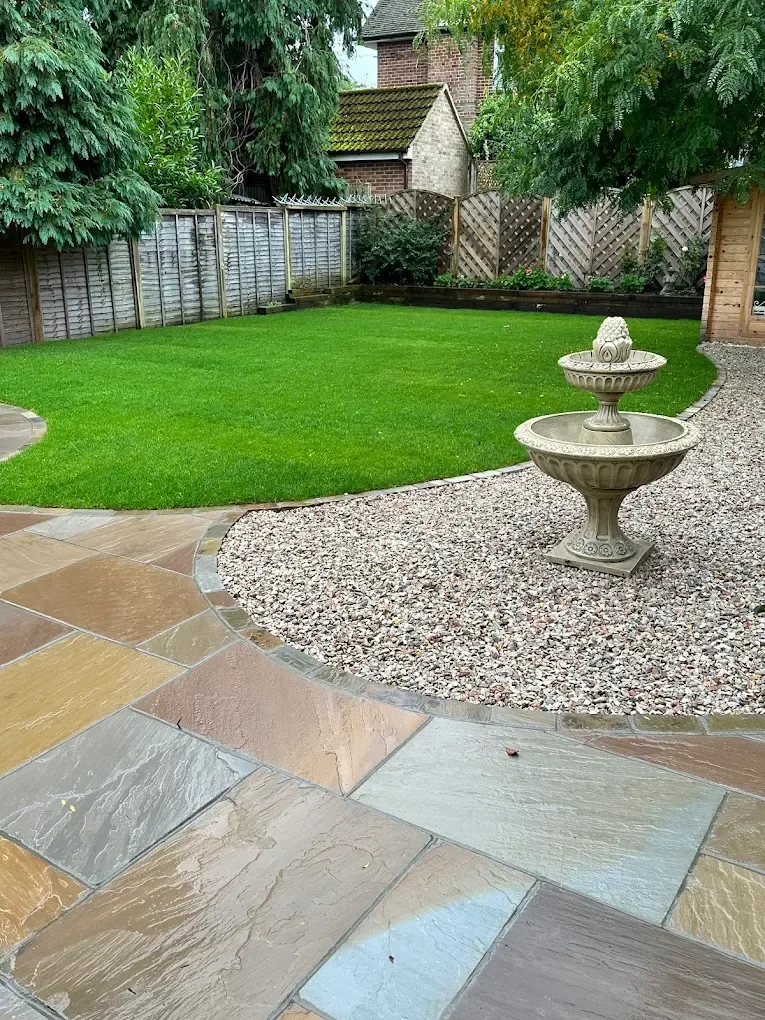
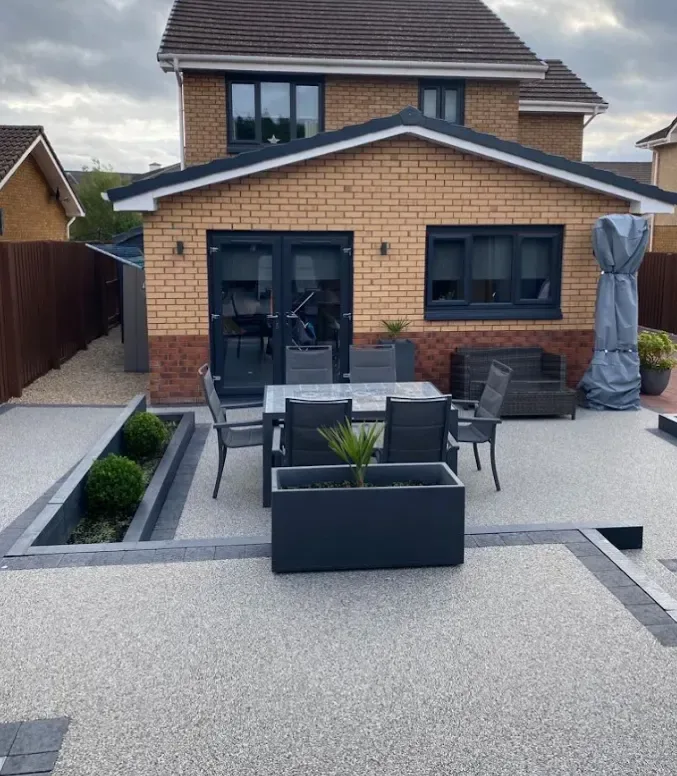
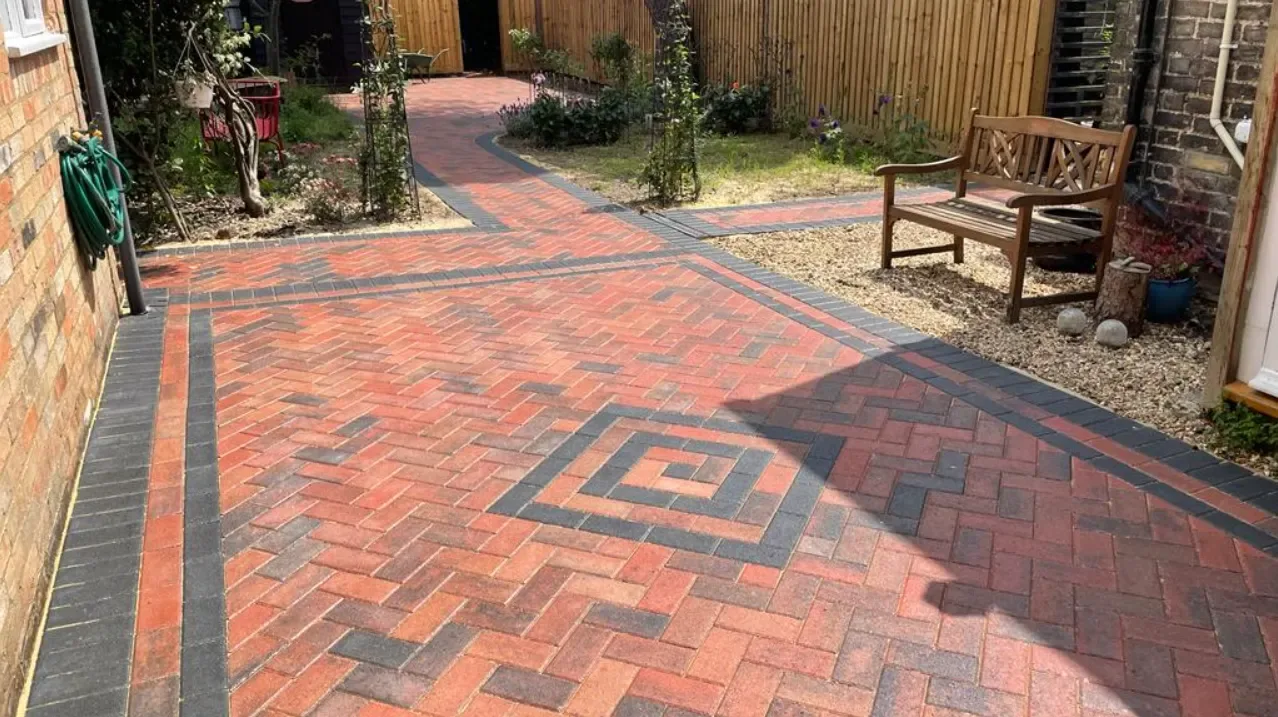
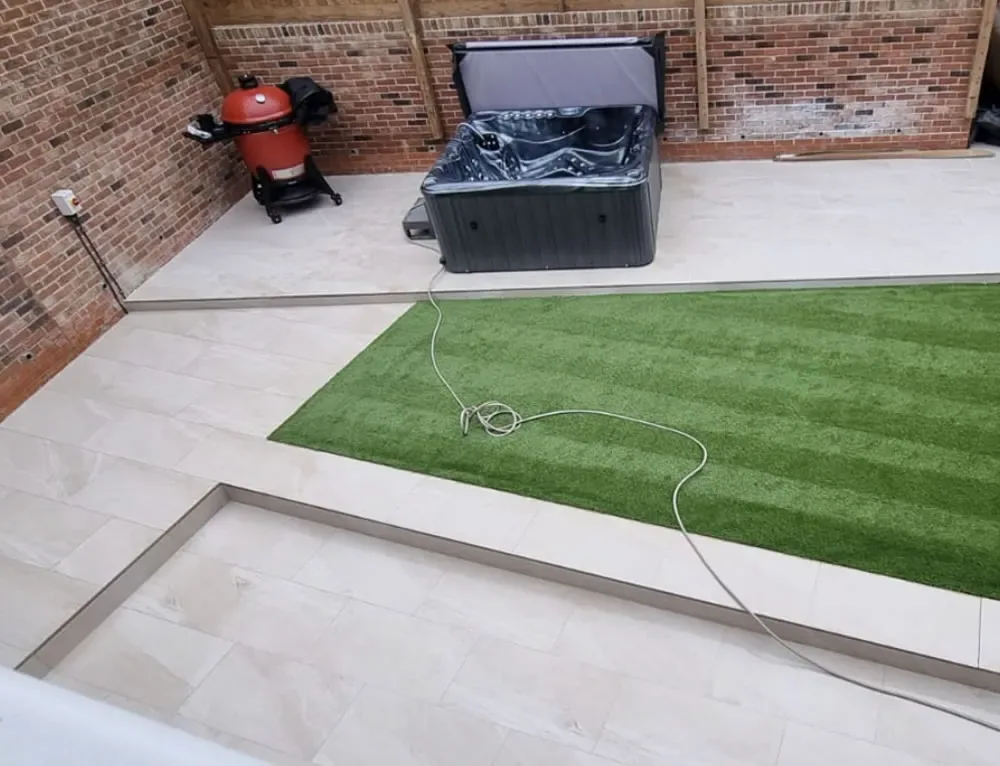
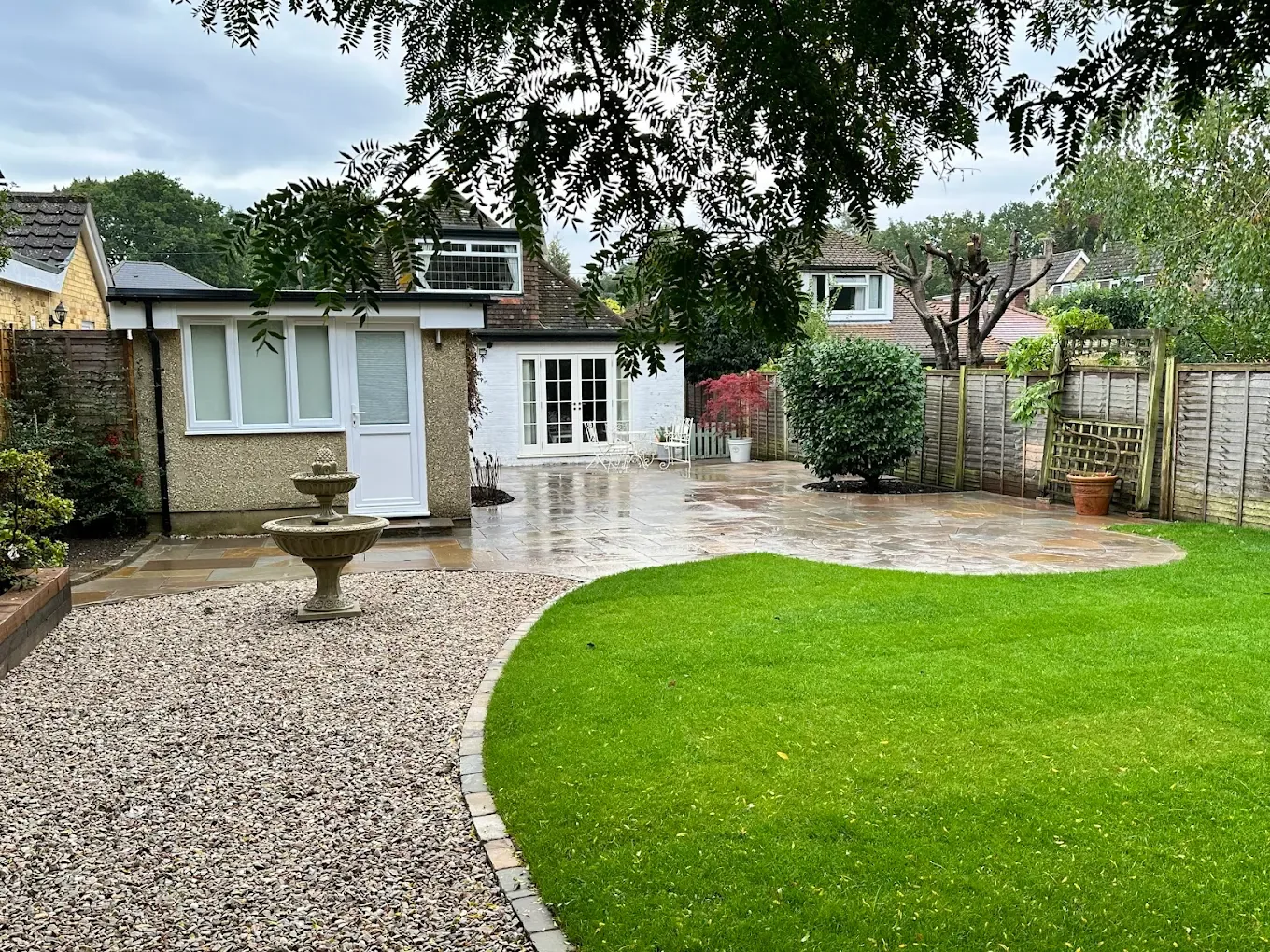
Patio and terrace projects
FAQs
Patio questions
Still unsure about something? Call us and ask — we would rather answer questions before a quote than after.
How far below the damp proof course should a patio be?
At least 150mm — two brick courses — below the DPC, with the surface falling away from the house. If levels make that impossible, the answer is a drainage channel and an aco or gravel margin against the wall, not simply raising the paving up to the brickwork. Bridging the DPC is how damp problems start inside the house.
What fall does a patio need?
Around 1:80 away from the building — roughly 12mm for every metre. That is enough to shed water without being noticeable underfoot or making garden furniture rock. Flat patios pond, and ponding leads to algae, staining and frost damage.
Should slabs be laid on five dabs of mortar?
No. Spot bedding leaves voids under the slab which fill with water, and the slab cracks under point load or in a hard frost. We lay on a full mortar bed with a cement slurry primer brushed onto the back of each slab, which bonds the unit to the bed across its whole face.
When is the best time of year to lay a patio?
Spring through autumn is easiest, but the real constraint is frost and heavy rain rather than the calendar. Mortar should not be laid in freezing conditions, and jointing compounds have minimum temperatures. Winter installations are perfectly possible in a mild spell, which is common enough on this stretch of coast.
Related services
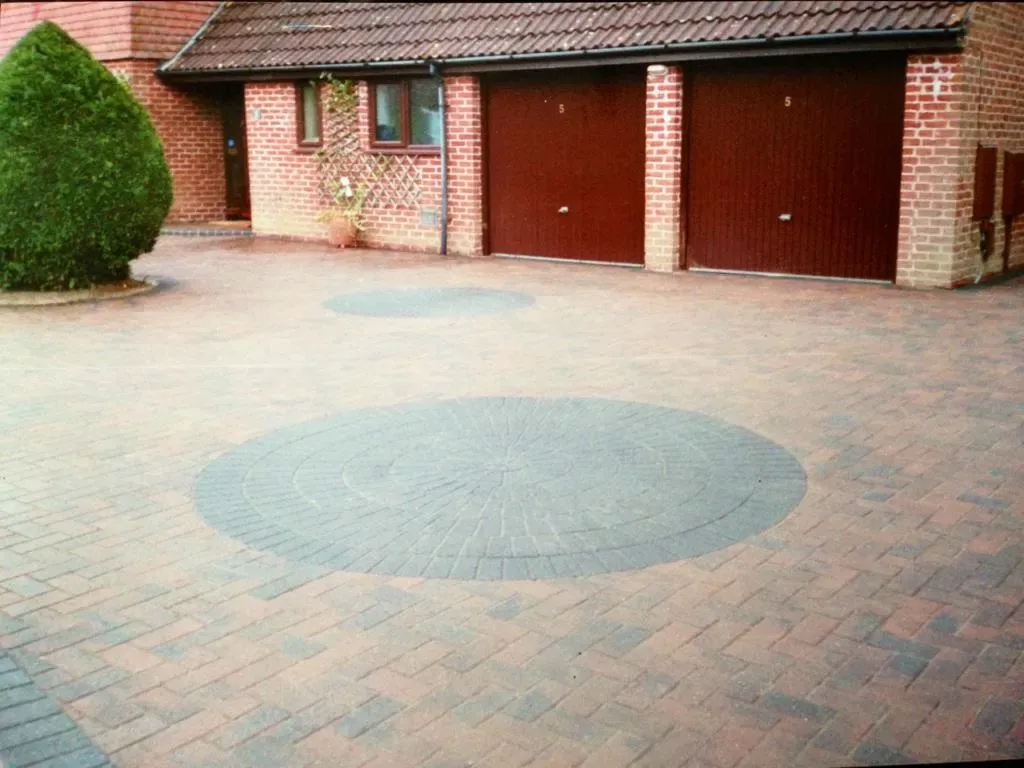 Block PavingHerringbone, stretcher and basketweave block paving with contrast borders and inlaid features.
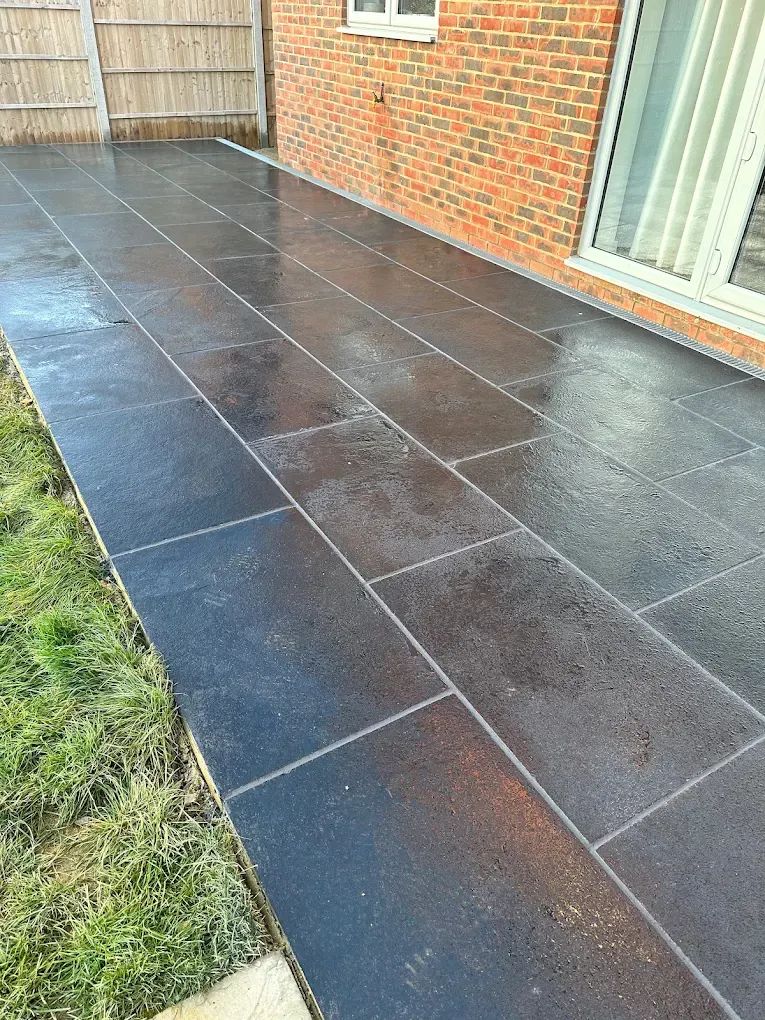 PavingPaths, garden paving, slabs and stone laid on a full mortar bed with correct falls and joints.
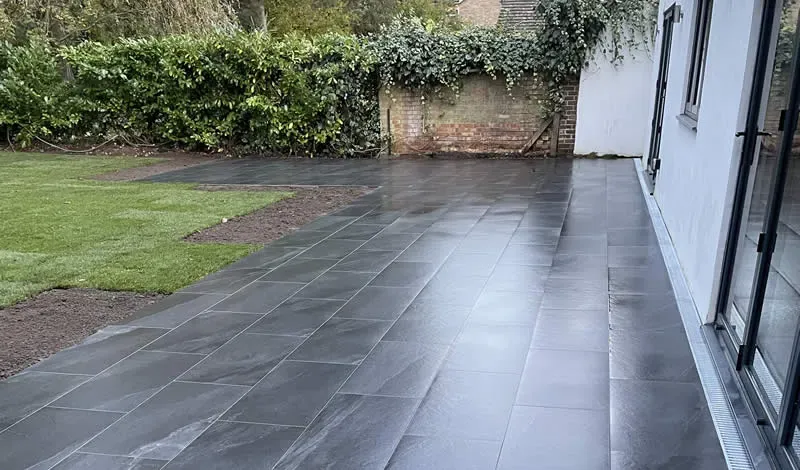 Porcelain PavingLarge-format vitrified porcelain on a primed slurry bond, for low-maintenance, colour-stable terraces.
Planning a new driveway or patio in Portsmouth?
Send over a few details and we will arrange a site visit, measure up and give you an itemised written quotation.
Call 07881 365851 or email portsmouthdrivewaysandpatios@gmail.com.